
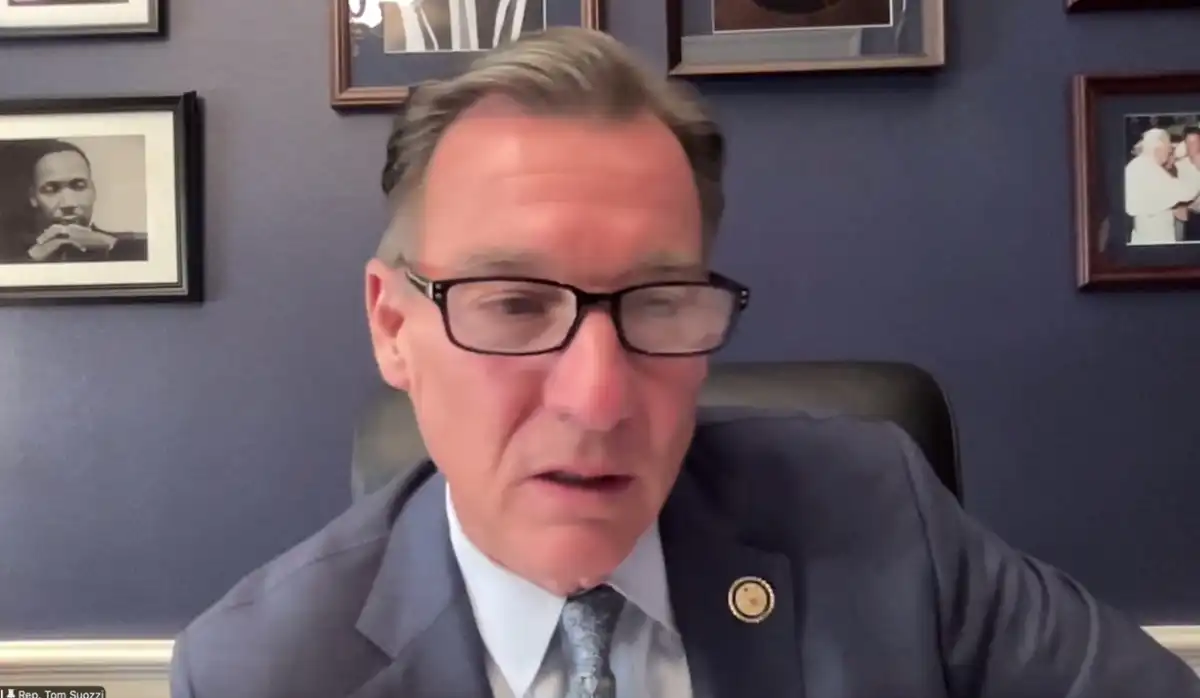
The Temporary Protected Status (TPS) of Salvadoran immigrants in the United States is at risk of expiring for the first time in 25 years, a situation that US Congressman Tom Suozzi is fighting against.
Under the TPS regulations, the United States Department of Homeland Security must determine whether to extend or terminate a country’s designation. In the case of El Salvador, the current TPS designation remains in effect until September 9.
Suozzi led a press conference on July 13, accompanied by Salvadoran TPS recipients, local and national advocates, and community members, to advocate for a permanent solution.
“The idea of withdrawing their status now and exposing them to possible deportation is not only inhumane, but also contrary to American values,” Suozzi stated.
There are more than 170,000 Salvadorans with a TPS designation throughout the country; of them, about 17,000 reside in New York state.
Nadia Mara Molina, co-executive director of the National Day Labor Organization Network (NDLON), noted that Salvadorans living in the country pay more than $1.5 billion in taxes and contribute more than $5 billion annually to the economy.
“You can’t take advantage of people’s work for decades and then remove their protection overnight,” he said.
José Urías, a Salvadoran citizen with TPS status, commented that he has two children in American schools and a legitimate business; all of this would be uprooted if he faced possible deportation. “I’ve been doing the right thing for many years,” he said.
They are part of the workforce
Prior to Monday’s press conference, Suozzi sent a letter on June 22 to US Secretary of Homeland Security Markwayne Mullin urging him to extend the Temporary Protected Status (TPS) designation for El Salvador; argued that Salvadorans have built lives, families and communities in the country and that the vast majority of them are part of the American workforce.
«The expiration of TPS would throw families into chaos, endanger the future of American children, disintegrate communities and harm the economy. “It would be unfair and inhumane,” Suozzi wrote.
Mullin responded on July 2 by noting that TPS recipients can seek other avenues to remain in the country, including lawful permanent resident status, employment-based immigrant visas or asylum status.
“TPS is not intended to serve as a substitute for asylum or as a path to permanent residence,” Mullin wrote.
Suozzi responded with another letter, written the next day, in which he stated that most of these alternatives are not available to Salvadorans with TPS and that, if they had been, they would have already taken advantage of them.
In his response to Mullin, Suozzi proposed a “parole in place” policy and an extended 2-year transition period in the event the administration does not extend the TPS designation for El Salvador, while advocating for a more permanent solution.
Salvadorans with Temporary Protected Status have lived and worked legally in the country since 2001, the year two major earthquakes hit El Salvador, causing thousands of deaths and creating a legal opportunity for Salvadorans to enter the United States.
TPS for Salvadorans also dates back to 1991, when it was granted to citizens of that country due to the civil war.
Congressman Suozzi stressed that he will continue to defend Salvadorans residing in the country as the September 9 deadline approaches.