
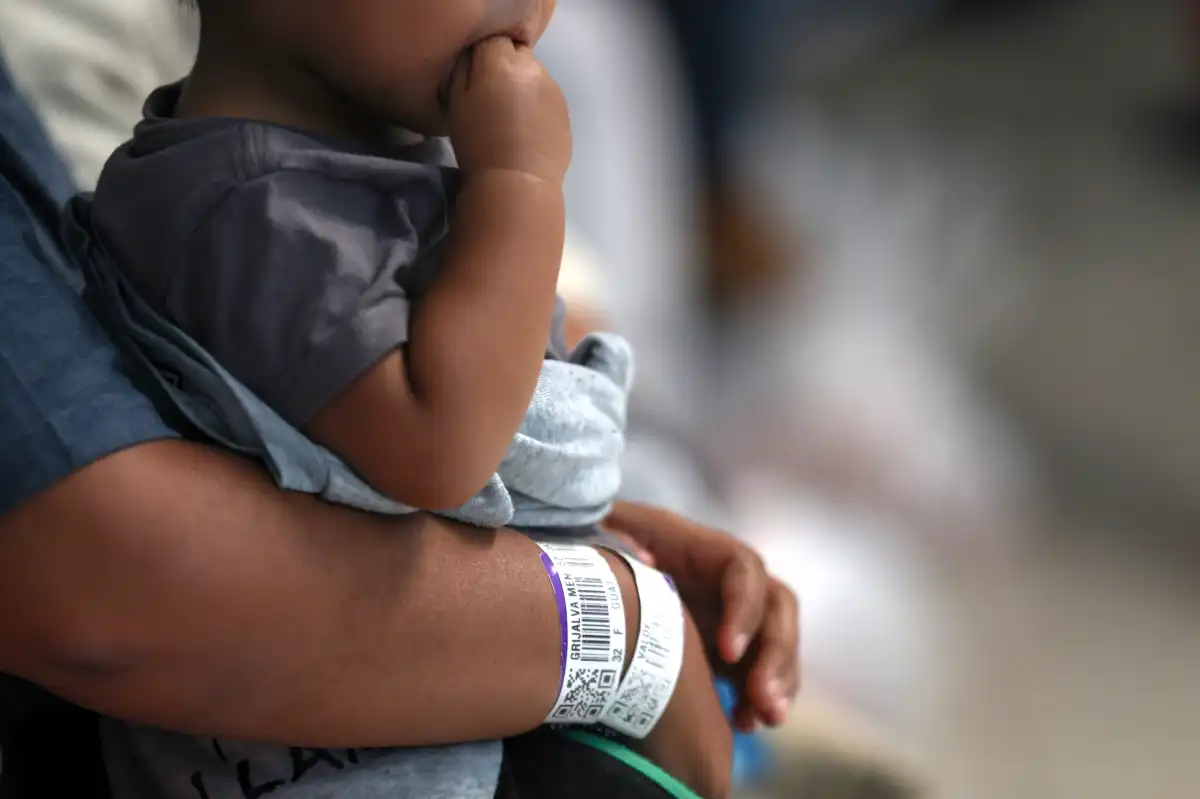
Around 150,000 children and adolescents, children of Salvadorans who benefit from Temporary Protected Status (TPS) in the United States, will be affected if it is cancelled, since the possible deportation of their parents would represent a family separation, warned the Salvadoran expert on migration and human rights, Celia Medrano.
These are, Medrano explained, “girls, boys and adolescents who are children of these people who were mostly born in the United States, so by right they are Americans.”
More than 170,000 Salvadoran immigrants remain on hold in a race against time to avoid their deportation, with less than a month left until the TPS for El Salvador expires, a benefit that has been in the sights of the Government of President Donald Trump since his first term.
The TPS for Salvadorans expires on September 9 and its termination would leave the beneficiaries without a work permit and exposed to deportation.
According to the migration expert, the Salvadoran beneficiary of TPS “has more than 20 years of living in the United States in regular immigration status, they master or handle the English language well, they have a job and an annual income between 40,000 to 50,000 dollars, they pay taxes, they have enjoyed medical security, they have their own home or pay a mortgage, they move around in their own vehicle, their primary family lives with them and they have assimilated basic rules of democratic institutions.”
That is to say, he pointed out, “they have roots in the United States and high standards of living compared to El Salvador, so their social and economic insertion in El Salvador could be very difficult if they return to this country.”
“They would return to a country that presents socioeconomic and environmental conditions equal to or worse than the conditions of poverty and exclusion that forced them to leave,” he indicated.
Prepare conditions
For almost half of ‘Tepesianos’, as TPS beneficiaries are known, “other options for immigration regularization are not feasible, since immigration deportation orders weigh on their shoulders that were suspended at the time they applied for TPS and if (the status) is cancelled, these deportation orders will be reactivated,” according to Medrano.
In the case of El Salvador, a country with which US President Donald Trump currently maintains good relations, it is believed that the Executive will only let protection expire for some 170,000 immigrants, according to data from The National Immigration Forum.
For the expert in migration and human rights, it is advisable that El Salvador “prepare conditions for forced return”, since “these Salvadorans will find a country very different from the one promoted abroad, with an increase in poverty, high levels of unemployment and more than 60% of the economically active population in the informal sector.”
“They would also face serious restrictions on civic space where 6 out of 10 Salvadorans prefer to refrain from expressing their opinion publicly for fear of suffering reprisals,” he warned.