

When Jaime Cruz, an usher at Teatro La Plaza with Down syndrome, confessed to the Peruvian director Chela De Ferrari that he was also an actor, she felt an unexpected shock: she saw her own prejudices and ignorance reflected as in a mirror. That conversation, simple and profound at the same time, became the catalyst for Teatro La Plaza’s Hamlet, a production that not only reinterprets Shakespeare’s classic, but does so through the voices and experiences of eight actors with Down syndrome.
“After talking to Jaime, new questions arose,” De Ferrari recalls. “Instead of wondering if they could adapt to the theater we already know, I began to imagine what would happen if their presence transformed the theater as we conceive it. If, instead of trying to make them fit into a pre-existing mold, we let their way of being in the world, of speaking, of thinking and relating to the text change the way the story is told. That meeting was the true starting point of the project.”
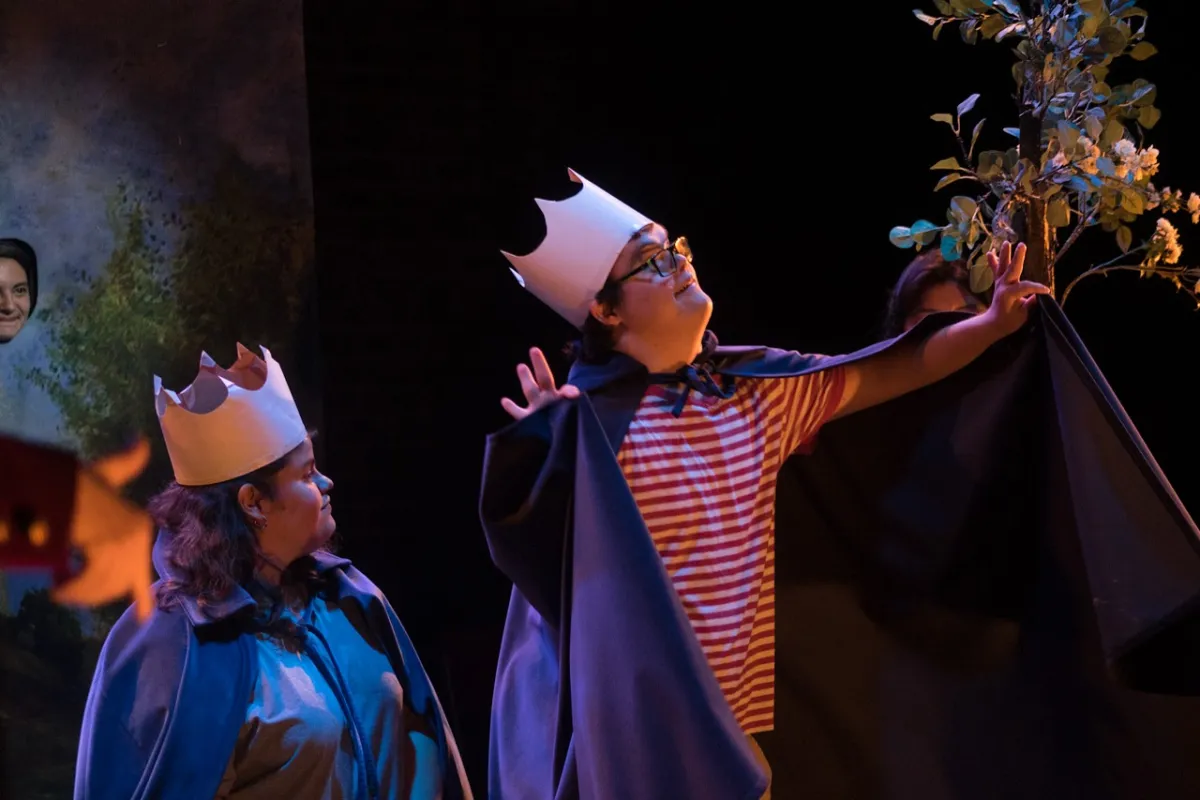
In this version, Hamlet is not one, but many voices. The actors play Hamlet, Ophelia and other characters, merging their lives with those of the prince of Denmark. “When the cast appropriates Hamlet, the text illuminates in a different way. Hamlet’s vulnerability and alienation resonate with his experiences. New themes do not appear, but certain aspects of the text become more visible: fragility, the desire to be heard, the need to be taken seriously. Shakespeare stops feeling like an untouchable monument and becomes alive, close, human,” explains the director.
At a time when diversity and inclusion are receding in many spaces, this work stands as an act of resistance. “Putting actors with Down syndrome at the center of one of the most emblematic texts of Western theater is political. But the most profound thing happens in the audience’s experience: seeing how they appropriate Hamlet with intelligence, humor and sensitivity changes the idea of who can occupy center stage. This play opens a crack in the notion that only certain bodies and voices can carry the great texts of the repertoire.”
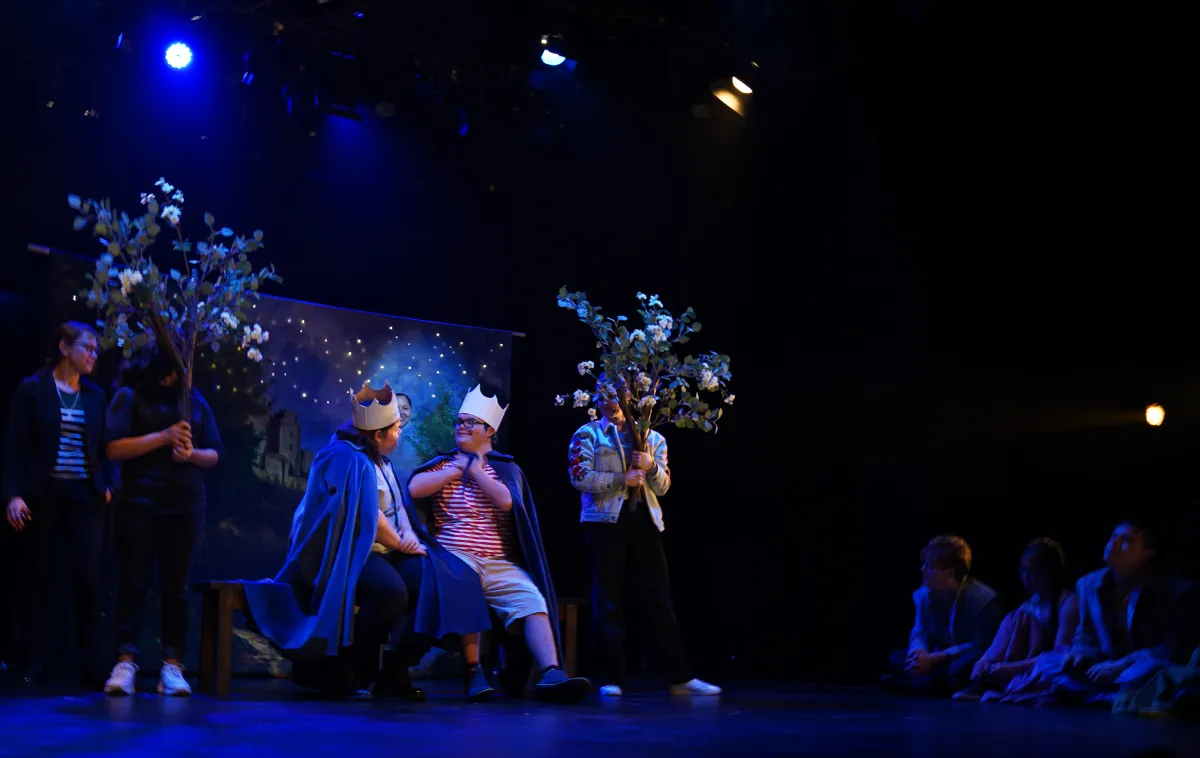
Multiplying Hamlet also breaks with the idea of the single hero. “Hamlet is many voices, many sensibilities, multiple ways of inhabiting the world. Identity stops being fixed and becomes shared. Our cast has experienced invisibility and underestimation; by sharing the role, they become empowered and unite in a collective struggle: to be taken seriously and find their place in a world that often marginalizes them. A community appears that claims its right to fully exist, to think, question, make mistakes and express complexity.”
The production also challenges the solemnity that often surrounds Shakespeare. “Shakespeare is not solemn. His highest speeches coexist with jokes, word games, metatheatre, irreverence and moments of irony. His characters dialogue with the audience, share their thoughts and break the theatrical illusion. Approaching Shakespeare without solemnity is, in that sense, being faithful to him.”
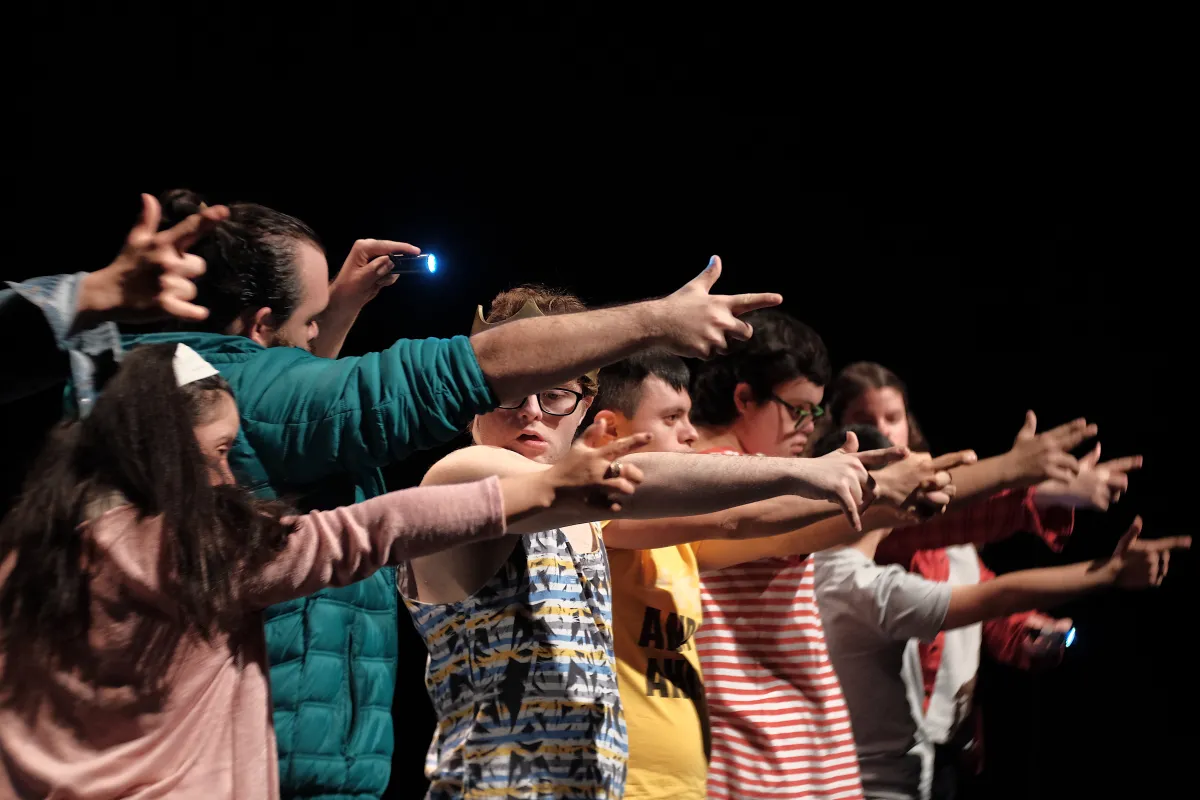
The response from the public, in more than 20 countries, has been unanimous: first curiosity, even distrust; then recognition. “They stop seeing people with Down syndrome and start seeing actors telling a powerful story. Shakespeare’s big themes—life, death, desire, doubt—feel close and human, and the barriers disappear.”
Chela De Ferrari highlights what these actors have taught her about theater and authenticity: “Theatre does not need ‘perfection’, but presence. They bring honesty and vulnerability to the stage; their performance is direct, open, without masks, and forces us to rethink what we understand by talent and virtuosity.”

And when they ask Hamlet’s most famous question—“to be or not to be”—it takes on a new meaning: “For them, it resonates concretely. It reminds us that the right to ‘be,’ to exist fully, is still something we are learning to recognize. What does ‘be’ mean to those who cannot find spaces where they are taken into account?”
Teatro La Plaza’s Hamlet is presented in Spanish with English subtitles, March 25 to April 4 at the Polonsky Shakespeare Center in Brooklyn. It is an incisive, moving and deeply human Hamlet: a classic text transformed by the strength and truth of those who were long made invisible.