
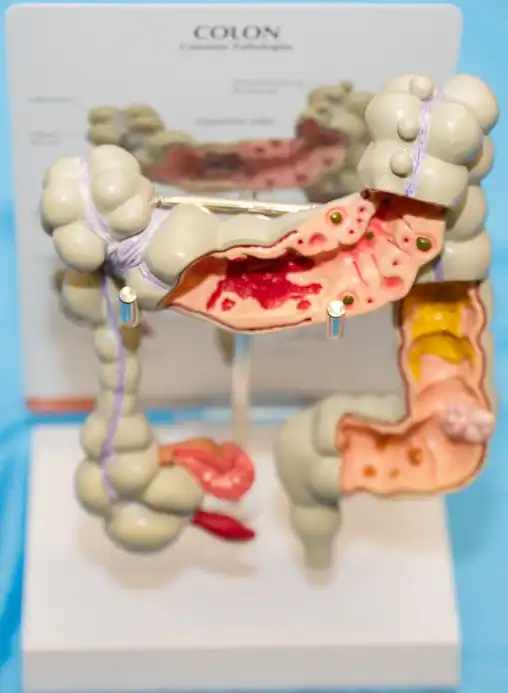
Colorectal cancer, also known as colon cancer, is the second leading cause of cancer death in New York. Faced with this situation, health authorities and professionals in NYC and Long Island promote prevention and early detection to protect the community from this type of cancer.
Notably, NYC Health + Hospitals surpassed 70% colorectal cancer screening rates among eligible patients for the first time, highlighting that in 2025, more than 117,000 eligible patients were up to date with their screening for this disease.
For its part, at the Mount Sinai South Nassau hospital on Long Island, a group of experts spoke about the importance and advances in detection, treatments and prevention, also presenting an important testimony from a patient who overcame this disease.
In honor of “National Colorectal Cancer Awareness Month” in March, New Yorkers ages 45 to 75 are urged to get routine screening to prevent colon cancer or help detect it early, when it is easier to treat.
No signs or symptoms
Colon cancer often has no signs or symptoms until it grows or spreads, so regular screening is important.
Symptoms of colon cancer may include blood in the stool or rectum, sudden weight loss, and persistent diarrhea or constipation. New Yorkers should see their doctor if they experience any of these symptoms.
A colonoscopy is reported to be a procedure in which the doctor inserts a flexible tube with a camera on the end into the rectum to look for signs of cancer. The doctor can detect and remove most small tumors and some types of cancer. Colonoscopies have a low risk of complications and are usually painless, since the patient is asleep during the procedure.
New Yorkers are more likely to develop colorectal cancer if they:
– They are older (the older the age, the greater the risk)
– Have a personal history of colon cancer or polyps
– Have a family history of colon cancer
– They present certain hereditary factors, such as familial adenomatous polyposis or Lynch syndrome
– Suffer from inflammatory bowel disease, such as ulcerative colitis or Crohn’s disease
– They do not exercise regularly
– They have obesity
– They drink alcohol
– They smoke
To reduce the risk of colon cancer, experts recommend:
– Maintain a healthy weight
– Eat less processed meats, such as sausages and cold cuts
– If you smoke, make a plan to quit
– Exercise regularly
– Reduce the amount and frequency with which you drink alcohol
It should be noted that most health insurance, including Medicaid and Medicare, cover colon cancer screenings starting at age 45. Check with your health care provider at NYC Health + Hospitals or on Long Island about your colon cancer risk and with your insurer about your coverage before getting screened.
Risk from 50 to 64 years
The American Cancer Society reports that colorectal cancer is the third most common cancer diagnosed in both men and women in the United States.
The rate of people diagnosed with colorectal cancer has decreased overall since the mid-1980s, mainly because more people are getting screened and changing their lifestyle risk factors.
From 2013 to 2022, incidence rates decreased by approximately 1% annually. However, this downward trend is mainly observed in older adults. In people under 50, rates increased 2.9% annually from 2013 to 2022.
In adults ages 50 to 64, the rate increased 0.4% annually during this period. Screening reduces deaths by detecting cancer early and removing precancerous lesions.
Dr. Dean Pappas, Chief of Colon and Rectal Surgery; Dr. Frank Caliendo, Colorectal and Robotic Surgeon; Dr. Bhanu Singh, Director of Endoscopy, Interventional Gastrointestinal; Dr. Abhinav Rohatgi, Hematology/Oncology; and Dr. Rajiv Datta, Head of the Department of Surgery and Medical Director of the Gertrude & Louis Feil Cancer Center at Mount Sinai South in Nassau, emphasized that increasing the rate of colonoscopies and awareness of the symptoms of the disease is vital to reducing the rate of colorectal cancer diagnoses.
“We strongly recommend regular screening for colon cancer, as its symptoms often do not appear until the disease reaches advanced stages,” added Dr. Caliendo.
Recently, Mount Sinai South Nassau’s “Annual Colorectal Cancer Awareness Day” highlighted the powerful testimony of Althea Harry, 73, a Freeport resident and survivor of stage II colon cancer.
Ms. Harry explained how the immediate action she took in seeing her doctor when experiencing common symptoms of the disease and the multidisciplinary care she received from colorectal specialists at Mount Sinai South Nassau helped her beat colon cancer.
Colonoscopies and test kits
NYC Health + Hospitals offers colonoscopies and at-home fecal immunochemical test (FIT) kits to help prevent colon cancer or detect it at an early stage, when it is most treatable. When colon cancer is detected at an early stage, the 5-year relative survival rate is about 90%; However, only 4 in 10 colon cancers are detected at this early stage.
NYC Health + Hospitals increased its colorectal cancer screening rate through continued expansion of FIT kits. Patients received prepaid return envelopes to easily send their FIT kit to the laboratory for testing.
In 2025, nearly 80% of distributed FIT kits were returned to the laboratory, significantly higher than the 30-60% typically reported. Instructions for completing the test were provided in 14 languages to eliminate language barriers.
Additionally, patients received automated reminders through their electronic health record to return their kits, and frontline teams benefited from easy-access registration data and dashboards to encourage patients to begin screening after turning 45.
“Regular screening is key to preventing colorectal cancer,” said Dr. Andrew Wallach, medical director of Ambulatory Care at NYC Health + Hospitals. “Screening can detect precancerous lesions and remove them before they turn into cancer; they can also detect cancers in their early stages, when treatment is most effective. I am proud of the work of our Ambulatory Care teams, whose focus on prevention helps keep New Yorkers healthy.”
“If you are between 45 and 75 years old, get screened for colon cancer,” said Dr. Nichola Davis, MD, MS, Vice President and Chief Population Health Officer at NYC Health + Hospitals.
“The FIT test is a simple, less invasive alternative and way to perform routine screening. The test can be performed from the comfort of your home. We have made significant progress in improving the effectiveness of our colorectal cancer screening programs with the FIT. We now distribute prepaid envelopes to make it easier for patients to return the FIT, and we have improved data that makes it easier for us to track screening and follow up with our patients. Screening saves lives.”
It should be noted that if you get a FIT test kit at NYC Health + Hospitals, your provider will send you a kit home. You will use a brush to get a small amount of stool (poop) and then return it by mail or to the laboratory for analysis. The FIT test kit should be completed once a year, as long as no blood is detected in the stool. If blood is detected, you may need a follow-up colonoscopy.