
From the train station I watch how children with red noses from the cold take their suitcases out of the trunk of the car while their parents tenderly say goodbye. Back to school, back to the city, back to pursuing his own dreams in the world. I think about my own father saying goodbye to his family in Argentina to move to the United States.
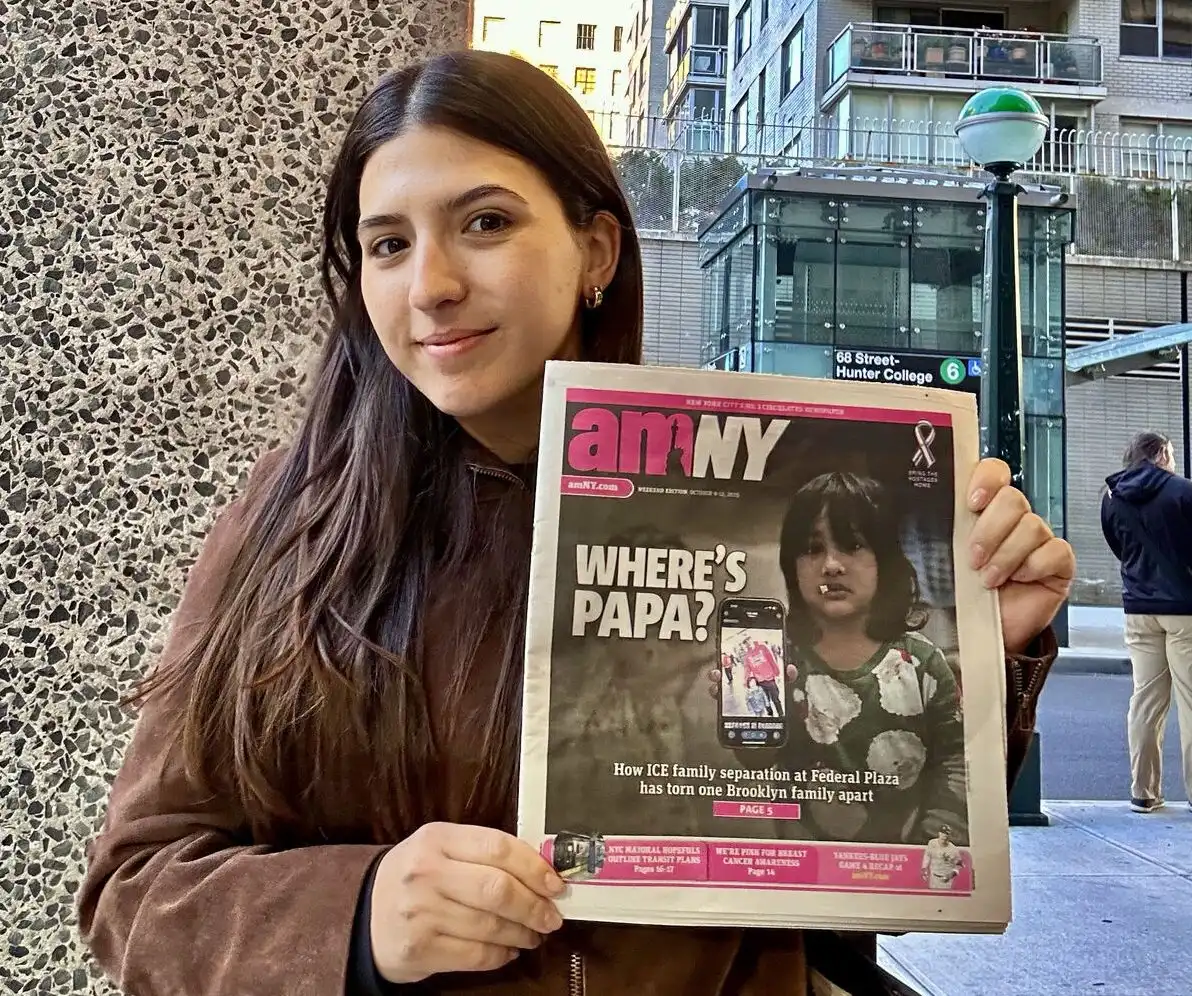
And, after spending the last few months as an intern at amNewYork, Noticia NY’s sister publication, covering families affected by US Immigration and Customs Enforcement (ICE) detentions, I think about the thousands of immigrant families who never get the chance to say goodbye.
My father came here 26 years ago. He always talks about how difficult it was. He left Argentina a few months after his mother died to move to another country and improve his life. He left behind his four brothers, my sister and me. He arrived with less than $200 and sometimes had to sleep on the street or in a garage. He worked in kitchens, in construction and in any job that could give him a little money to rent a room.
I was only three years old when he left. After 2001, immigration policies became stricter. I didn’t get to see him again until he got citizenship. I was 12 years old when I saw him again. I remember my grandmother telling me how my dad called crying. He wanted to give up everything and return to Argentina, but he continued fighting for a better life for my sister and me.
I owe him everything.
I moved to the United States when I was 22 years old.
I was lucky to have a father who supported me. He welcomed me to this country and helped me in my transition. Many immigrants do not have that support. Working as a pastry chef in Michelin-starred restaurants, I met people from many cultures who, like me and my father before me, left everything behind—culture, language, even family—to seek a better future.
Even with my father’s support, there were many obstacles. I struggled with every essay I had to write for school. Some people made fun of my accent or how I pronounced certain words. Like many Latinos, I learned resilience from my father, my family, and every immigrant I met who kept going because they had no other option.
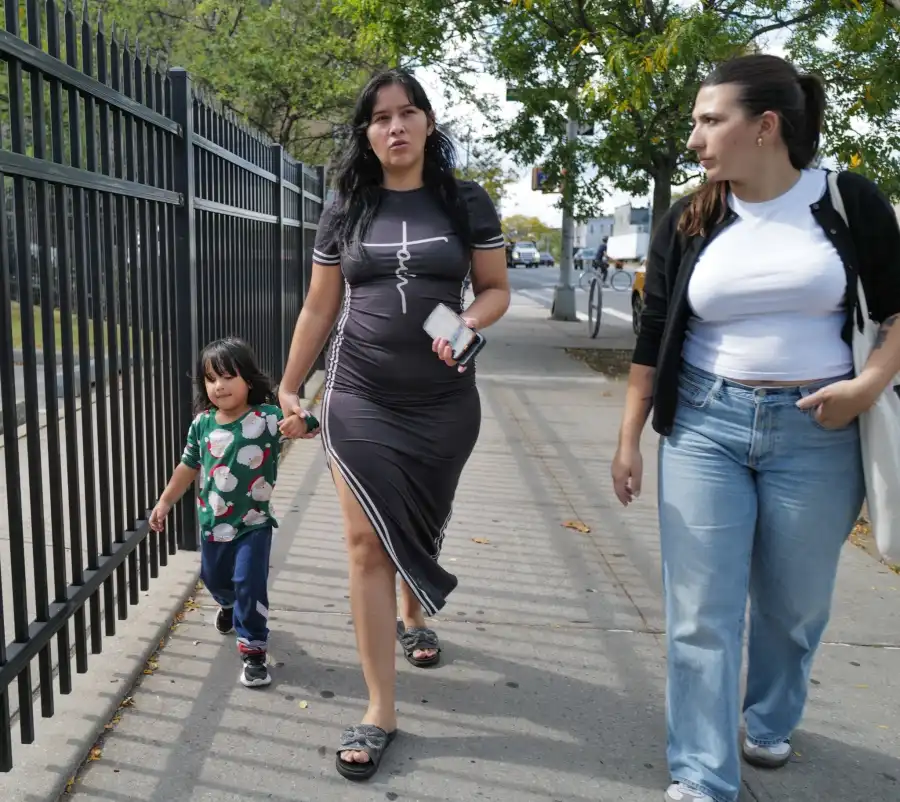
People like Franyelis, a pregnant Venezuelan woman I met working as an intern at amNewYork. Or Jessica, an Ecuadorian woman who gave birth a month after her husband was deported. Or so many others who continue to inspire me.
Learning English wasn’t easy, so I never thought I could be a reporter, but I realized these stories needed to be told.
When I began my internship at amNewYork, I had one goal: to amplify the voices of Hispanic communities. I never imagined that, without prior experience in journalism, I would have the opportunity to do all the work I did in the last four months. I am so grateful to everyone at amNewYork who pushed me and allowed me to do what I wanted to do.
Dean Moses, head of amNewYork’s police section, and I toured New York meeting with families. We spent hours with them listening as they shared endless nightmares. Seeing their faces—eyes full of tears, voices broken by fatigue—almost broke my heart.
Almost every Sunday we visited a church where immigrant families gathered to pray for their husbands, fathers, mothers, and children. There Dean met Alexandra, an Ecuadorian woman whose husband had been detained by US Immigration and Customs Enforcement.
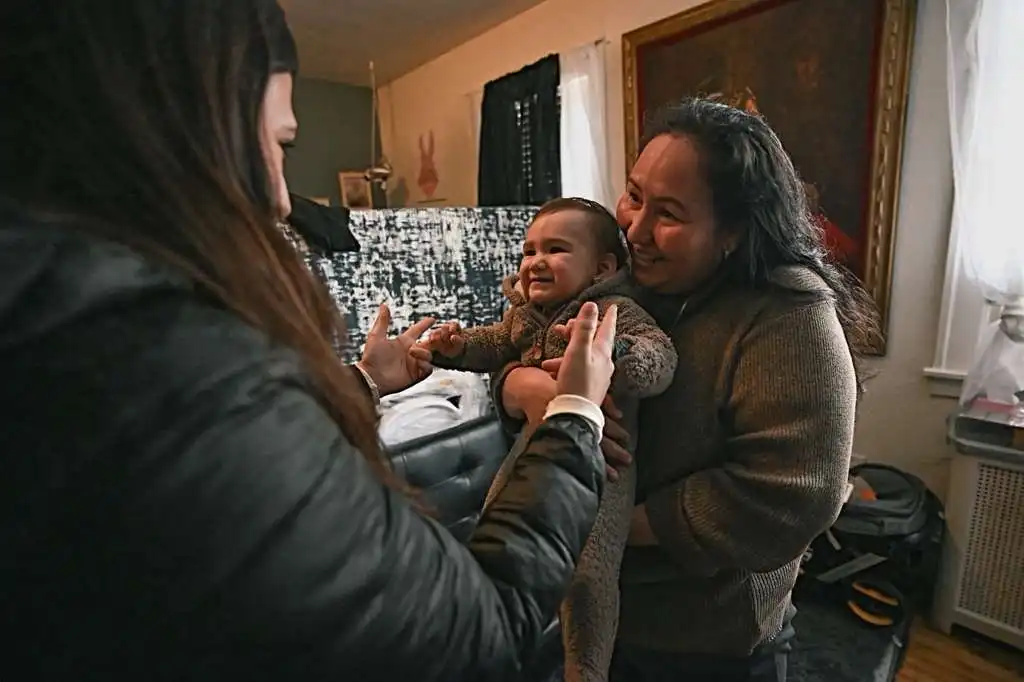
We went to Queens to talk to her and her 11-month-old daughter, Mia. After our first meeting, Alexandra and I spoke every day for a month, until her husband was released. Dean and I went to the airport at midnight to see Alexandra reunite with her husband after 44 days of separation and capture that moment for amNewYork.
I cried like it was my own family. As journalists we need to be objective, but the trust and relationship we built with Alexandra and others allowed us to tell the story in greater depth, so that others can better understand their experiences.
When I see Alexandra hugging Manuel with her daughter Mia in her arms, or every time Jessica’s son Dylan runs to greet Dean, I know that they are the future that these parents sacrificed for, as I was for my father. Alexandra, Jessica or Franyelis continue forward for their children, for a better future. These stories needed to be told.
These last few months consolidated my dream of becoming a bilingual journalist. I want to bring more voices to the newsrooms, more stories that reflect resilience and hope. I want to help build a better future that so many immigrants who inspire me sacrificed so much for.
Immigrants made New York a city for dreamers; We cannot fail them now.
-Florencia Arozarena was an amNewYork intern in the fall of 2025 and currently collaborates as a freelance author.