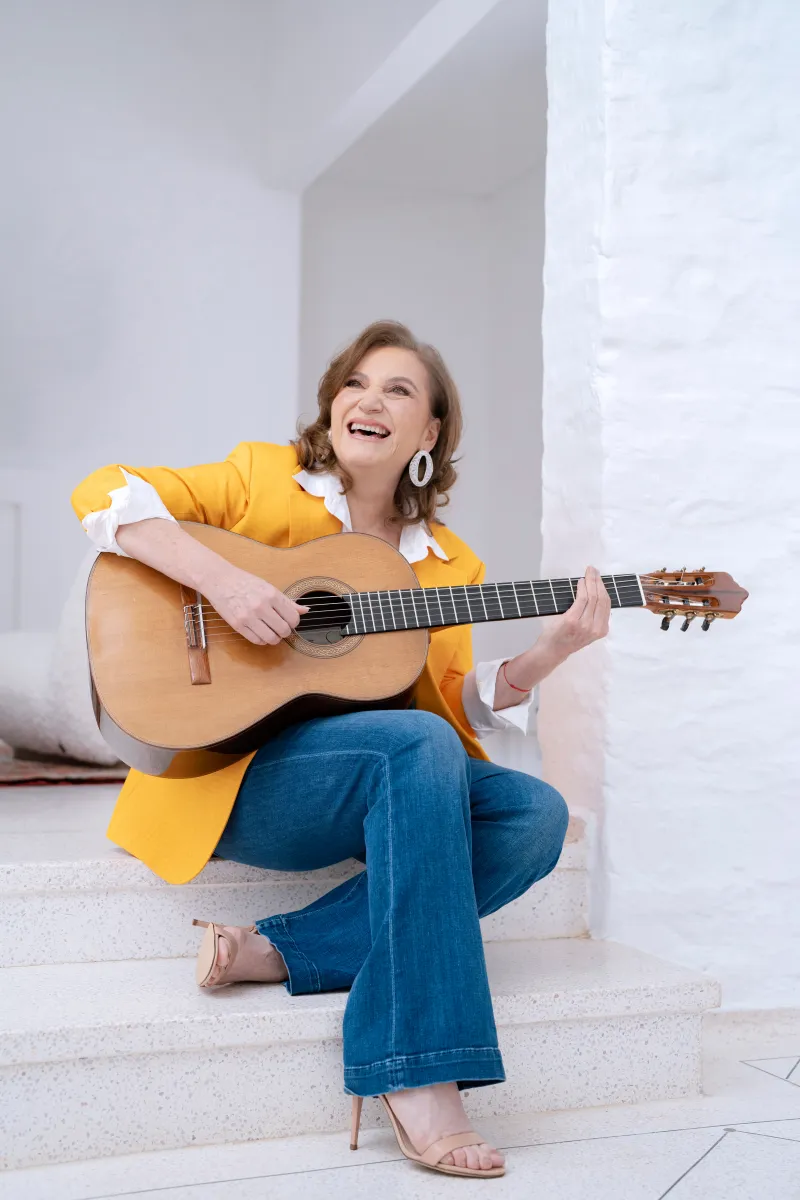
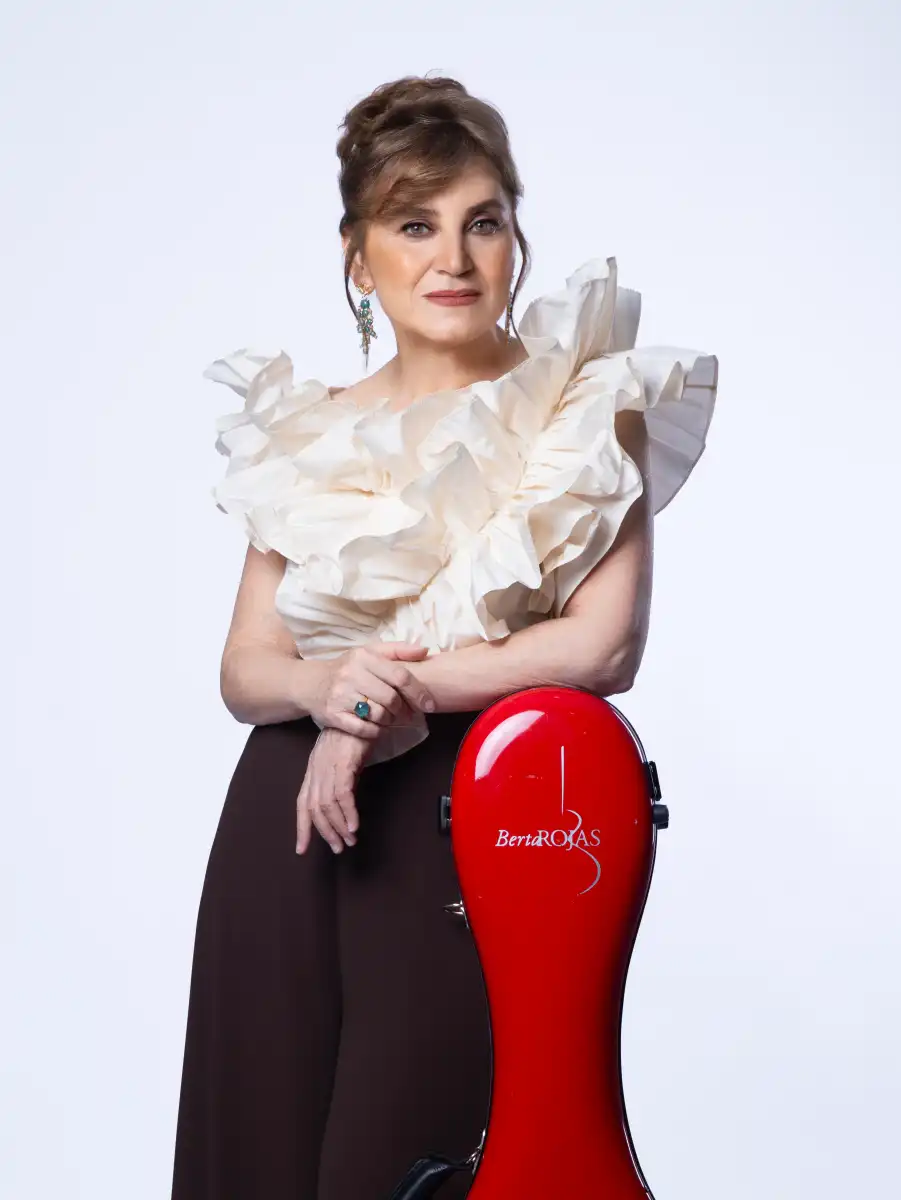
For decades, Berta Rojas has made the guitar more than just an instrument: she has turned it into territory, memory and language. Born in Paraguay and today recognized internationally as one of the great voices of classical guitar, Rojas—winner of the Latin Grammy in 2022 and nominated four times—is part of an exceptional group of women in the elite of this genre. Her virtuosity and the intensity of her performances have taken her from the world’s stages to the classrooms of Berklee College of Music, and recently to the board of directors of the Latin Grammy, reaffirming her commitment to Latin American music and culture.
This artistic and academic concern gives rise to La Huella de las Cuerdas (The Journey of Strings), an ambitious sound and visual journey that covers five centuries of musical history in Latin America. The project, developed over more than two years, led Rojas to travel more than 8,000 miles and collaborate with 17 musicians in more than ten countries, working hand in hand with researchers and musicologists. Each of the 11 songs—all accompanied by its own video—poses a dialogue between the guitar and other string instruments that define local identities, from the depth of the 25-string Chilean guitarrón to the vibrant pulse of the Puerto Rican cuatro.

The trip also links the ancestral with the present. One of the most notable moments of the project is the duet with Gustavo Santaolalla, composer of the theme of the series The Last of Us, whose music brought the sound of the Andean ronroco to millions of listeners around the world. In this intimate conversation, Rojas reflects on identity, heritage, and the power of strings to tell who we are. We invite you to read the full interview.
The Journey of Strings / La Huella de las Cuerdas is born from a question about how the guitar came to become the musical heart of Latin America. When did you understand that this research had to be transformed into an artistic work?
When I directed an Ibero-American guitar festival in Washington, DC It was a festival that represented all Ibero-American countries: the Iberian Peninsula and all of Latin America. There I realized that many times the instruments that best represent certain cultures are not necessarily the guitar, but rather its sisters, its cousins.
That’s how I found the cuatro in Venezuela, the Puerto Rican cuatro in Puerto Rico, the charango, which deeply represents Andean cultures, and so many other instruments in Paraguay. All of them knew how to capture the essence of their cultures and transmit it, like someone who has an accent that defines them. In the same way, the music of our countries has an accent that identifies it, and these instruments become the voices through which those cultures express themselves musically.
The project is presented as an immersive experience that combines album, videos, book and augmented reality. From your perspective, what does this approach contribute to the way cultural memory is preserved and transmitted today?
I think that today the world faces a very big challenge, because our senses open in many directions at the same time. The presence of technology in our daily lives is undeniable. Just as, through augmented reality, you can “enter” an instrument and play it—which is part of our goal in the book—we also make an invitation to sit and listen.
Whoever plays a vinyl is because they have the time to stop and enjoy. Sometimes it is important to recognize that, while we travel at unimaginable speeds thanks to technology, we also need to stop and reconnect with the little things in life. Vinyl invites that reflection, that space of personal care and the reunion with the most genuine thing we have to offer: the expression of our soul through music.
My dream would be that a father, a mother, a grandfather or a grandmother could sit down with their children or grandchildren and listen together: from the calm that vinyl offers to the speed and curiosity that a 3D immersion arouses through augmented reality.
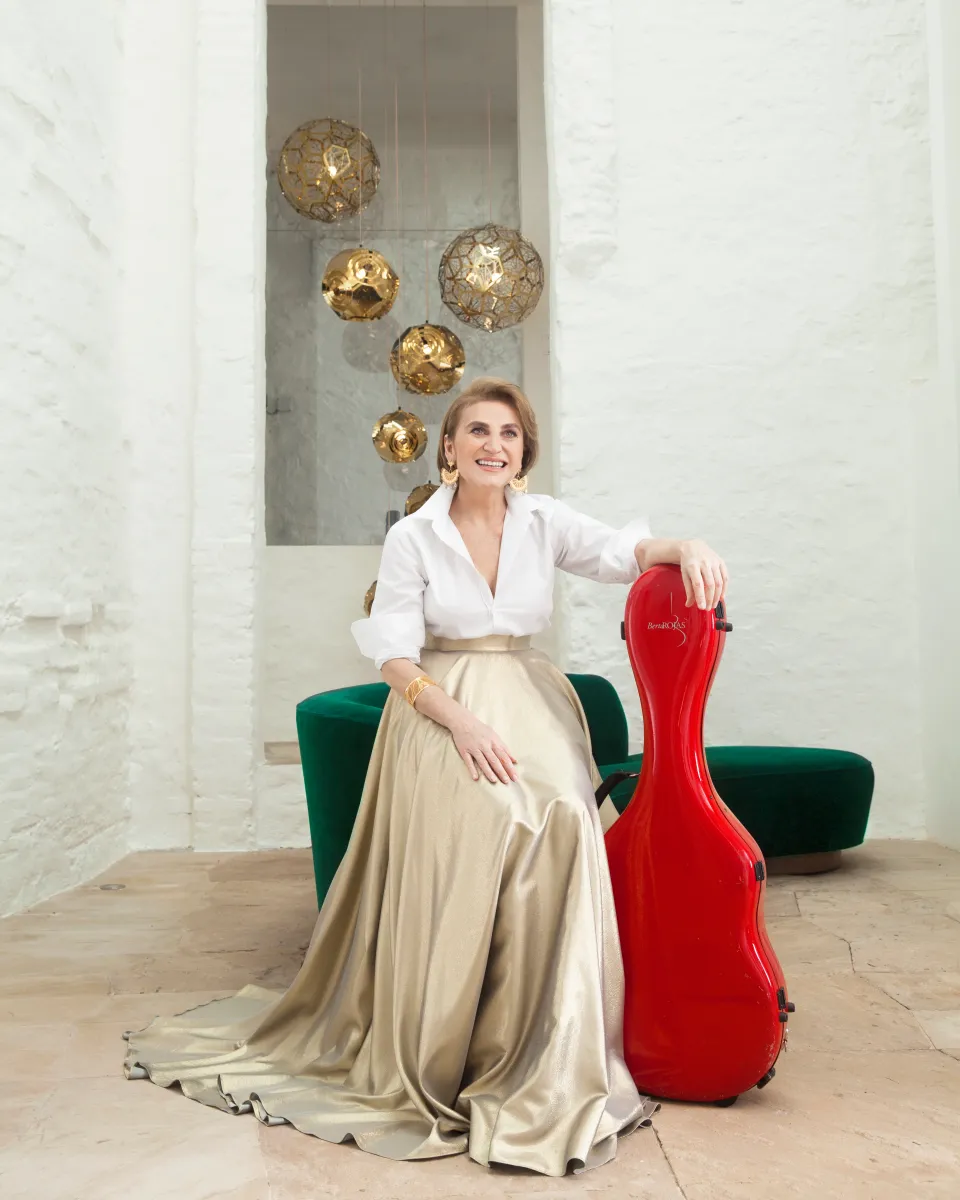
Over more than five centuries, the guitar was transformed through contact with indigenous, African and European cultures. What does this evolution reveal about the musical identity of Latin America?
It reveals, above all, resistance, permanence and a deep desire to communicate through music. As Latin Americans, we have different accents, different voices and particular ways of seeing life. This diversity is as rich as the color and geography of our America.
Just as there is an accent, there is a music. There is the joy of Central America, but also the depth of the south, marked by its mountains, by the snow, by the aridity in countries like Chile. That geography produces music that represents our cultures. This trip is, above all, an invitation to get to know each other and recognize ourselves through our music.
For two years you traveled to more than ten countries and collaborated with 17 musicians who were guardians of traditional instruments. Were there any encounters that changed your understanding of the project or your own role as a performer?
From the first recording I understood what this project was going to be like. That first meeting was with Gustavo Santaolalla. He is a world-renowned, multi-award winning composer who has written music for a small instrument, sister to the charango, called the ronroco.
The fascinating thing is that, thanks to the international projection of his music, today young people from all over the world play that instrument without necessarily knowing that it is Andean. They associate it with a video game, with a series like The Last of Us or with movies like Babel or The Motorcycle Diaries. I meet young people who don’t speak a word of Spanish and yet they play the ronroco.
That tour demonstrates how these instruments can travel between cultures. When young people embrace them, that is when they truly remain, transform and acquire a new life. They no longer represent only a specific culture, but their voices are put at the service of the human soul, no matter where they are played.
One of the central moments of the album is the duet with Gustavo Santaolalla, known globally for his music for The Last of Us. What place does this collaboration occupy within the sound story of the album?
It is the meeting with the greatest international projection and, probably, with the greatest connection with the new generations. That Gustavo has brought an ancestral instrument to the universe of video games and series already speaks of the enormous potential that these instruments have when they are cultivated and embraced by young people.
This project also led Gustavo to discover the Chilean guitarrón, a 25-string instrument that is like a cathedral of sound. He has just commissioned one, and I am very excited to think what will happen when he incorporates it into his musical language, perhaps in a film or a series. In this way, we also open the door for instruments at risk of disappearing to find a new life.
In addition to being a performer, you are an educator and were recently appointed to the Latin Grammy board of directors. How do these roles dialogue with projects that seek to preserve and project Latin American music?
It is a great honor for me to be part of the Latin Academy of Music. It is a community of fervent music lovers, where each creator is treated as a jewel who needs support to continue offering the uniqueness of their voice.
The Academy develops fundamental preservation projects, such as scholarships for young talents and research programs. All of this generates a creative effervescence, but also guarantees that what is alive today can be documented and understood in the future. There must be a culture that constantly creates, but also researchers who write about it. This comprehensive view is essential so that music lives today and can also be read tomorrow.
After this extensive musical and human journey, what mark do you hope to leave with La Huella de las Cuerdas and what would you like the public to discover when listening to it?
We wanted to open a small door and invite you to continue looking and discovering the infinite musical wealth of Latin America: that which is expressed through its strings and, above all, through our souls.