
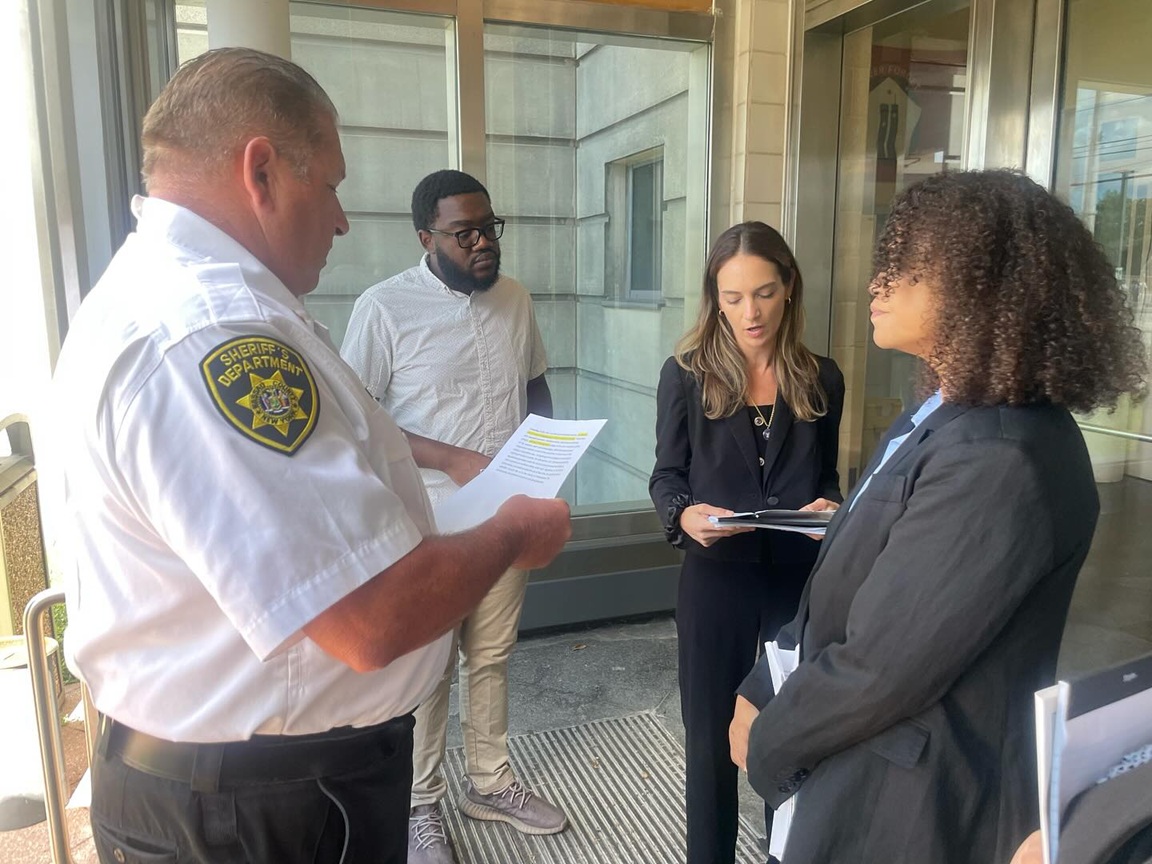
The visit of two state legislators to a Nassau County prison, in Long Island, where people arrested for ICE have forced the County Executive, Bruce Blakeman, to modify certain policies on their conditions and has warned that some, including those who have no criminal record, could be held for more than 72 hours of the legal period of detention.
Currently, 14 people are detained in the jail located in East Meadow, where more than 1400 immigrants arrested for ICE in the New York metropolitan area have remained in this prison since February. For each detainee, the federal government pays Nassau County $ 195 per night of detention.
“We have signed an integral agreement because allowing ICE to use our cells contributes to a safer county, and we will continue to do so,” Blakeman said at a press conference on July 23.
People arrested for ICE are not intended to be held in county prisons or in non -federal immigration detention centers, but Nassau County opened its jail to ICE through an agreement.
Suffolk County had a similar agreement, but breached it after a lawsuit determined that the county violated state law and the fourth amendment by detaining hundreds of immigrants after their release date at ICE request.
State Senator Julia Salazar and state assemblyman Michaelle Solages declared that they were initially denied access when they arrived without prior notice at 10 am on July 23 to take a tour of the East Meadow prison, observe the conditions of the facilities and talk to people arrested for ICE in this county jail.
The two state legislators were finally allowed to enter the facilities once Nassau’s legal advisor reviewed his application. They were accompanied by local officials and were not allowed to take their phones or take photos.
Blakeman explained that the entry of both was “delayed, not denied” because the county did not receive prior notice of his visit and needed time to prepare a team for his safety and that of the prison. He added that they were accommodated within 45 minutes after their arrival.
State law allows elected officials such as Salazar and Soks to visit the penitentiary facilities at will. Salazar, who represents the 18th district of Brooklyn, presides over the organization Crime Victims, Crime and Correction. He said he has visited half of the state’s prison centers, including visits without prior notice to local prisons.
He added that this was the first time they denied access during his visit. “They had no right to deny us access and I’m glad that they finally understood and allow us to enter,” said Salazar.
Salazar said that neither she nor Soages observed “atrocious” conditions in jail, but who spoke with people who had been held in the county facilities for more than the 72 hours allowed.
Blakeman said he was not aware that he had held retained for more than 72 hours.
Salazar said the cells did not seem to be crowded and that not all the 50 designated individual cells were occupied. Blakeman indicated that in each cell only one person fit at the same time.
Salazar commented that he spoke with a person in the Nassau County jail: a Huntington businessman, originally from Guatemala, who has resided in the area for about 20 years and has not been convicted of any criminal crime. He added that he was arrested on Sunday and taken to the facilities that same day, but three days later he continues in this jail.
“I suspect, given that period, that he and other people here are arrested more time than allowed by law,” said Salazar.
Blakeman said he could not confirm or deny if the people who have only committed a civil crime, such as staying longer than allowed by the visa, and not a criminal one, were arrested in ICE cells, since this federal agency does not share that information with the county.
He seemed surprised to learn that Huntington’s businessman was in jail without a criminal record. Blakeman said that he would “investigate” his case after the couple’s visit informed him about the possible prolonged detention of man.
«They are in this country as people who should not be here. Therefore, we don’t know who they are, ”said Blakeman about the detainees. «The objective is the people who are illegally, who have committed a crime in the state of New York. That is the criterion presented by ICE, and we believe they are adhering to him ».
However, Salazar said there are people retained in detention centers who have not committed any crime, including Huntington’s businessman.
Blakeman said he believed that there should be a process for those who have lived in the country for a prolonged period, they are not criminals and have a paid job so that they remain here or obtain a legal status.
However, he said he had no plans to modify the collaboration of the county with the ICE or the way he stopped people. Other conditions observed by legislators included limited access to showers and restrictions on recreation, which often limited their exposure to sunlight and outdoor.
Blakeman said that the county policy was not allowing ICE detainees to shower during what, according to him, it was a maximum detention period of 72 hours, and added that he did not believe they had “right” to shower.
However, he indicated that, after the visit of the legislators, the policy would be modified and the detainees would be allowed once a day if they requested it. He considered that this would contribute to healthier conditions for prison officials and other inmates.
Blakeman indicated that the policy that prevented ICE detainees from accessing outdoors while they were in jail would not change, since they were not allowed to mix with the general population.
Salazar expressed his suspicions about the conduct of the County, claiming that he made him believe that they intended to hide information or that the conditions were deficient. “We have no other justification,” said Salazar.
He added that Nassau County officials who accompanied them in the route “strictly limited” the communication they could have with the detainees, which was carried out through Plexiglás. When he asked officials to see different aspects of the facilities, he commented that this used to generate debate.
Blakeman denied that they had been in a hurry for the facilities or that their access was limited.
Salazar has advocated the approval of laws that protect immigrants in the state legislature, including the law of dignity, non -detention (Dignity Not Detention Act), which would prohibit state and local governments with contracts with federal immigration authorities.
“I think it is unacceptable that there are detained people, that our neighbors, who have not been accused of any crime, are in migratory detention centers right here, in the state of New York,” said Salazar. “We don’t have to be accomplices of this.”
Solages, legislator of Haitian and resident of Elmont, said it is “heartbreaking” anticipating that ICE agents stop people in their community.
“They no longer chase criminals,” Solages said about ICE. “They pursue those who do the right thing for this country, who are part of this social fabric.”