
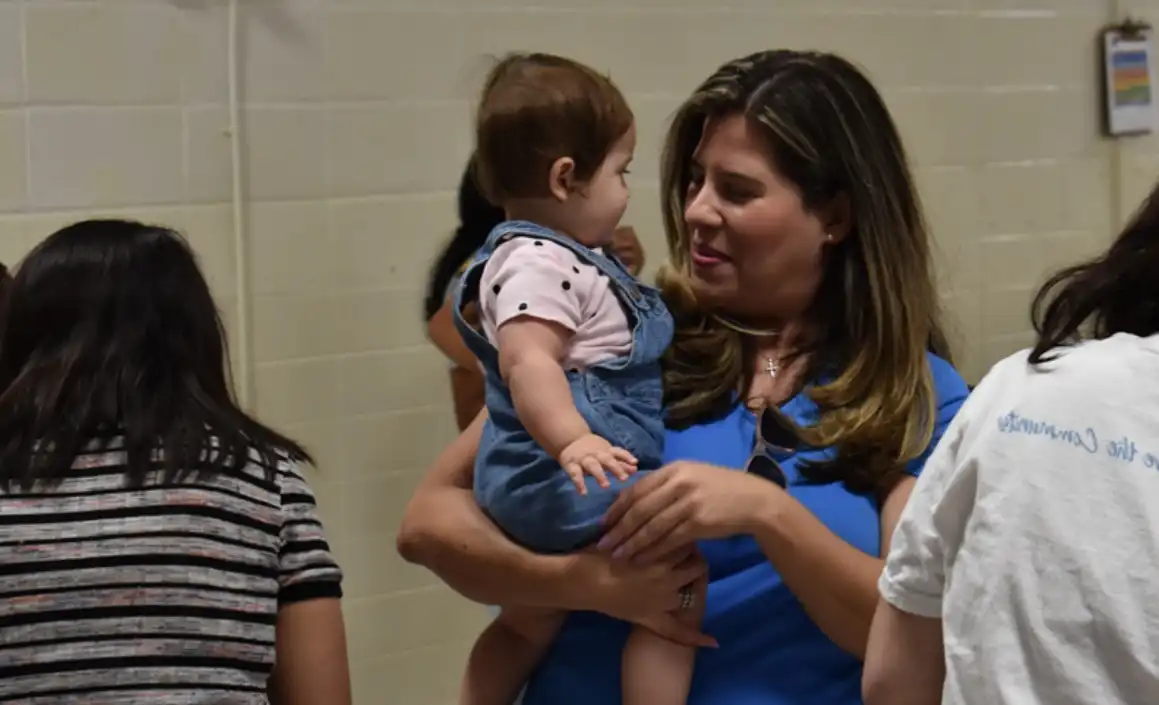
The civil rights organization LatinoJustice denounced as “cruel” the rule to determine that an immigrant is a “public charge” resumed by the Donald Trump Government, and warned that it could harm American families with children.
LatinoJustice indicated in a statement that the rule, scheduled to come into effect on September 18, will affect numerous applications for visas, admission to the United States and permanent residence.
“The rule abandons long-standing practices that made clear that receiving limited benefits would not, by itself, count against a person in a ‘public charge’ immigration application,” he explained.
Immigrant advocates have expressed fear about the havoc that expanding this policy will wreak on the low-income undocumented community, and especially on mixed-status families, those that have at least one U.S. citizen member.
The Trump Administration announced that it has revived its controversial policy of denying permanent residency to residency applicants who may be considered “a public charge.”
During his first term, in 2020, Trump implemented public charge regulation for immigrants who had applied for social assistance for food, housing or health care, such as the public Medicaid program and the Children’s Health Insurance Program (CHIP).
The measure left many undocumented immigrants without the possibility of applying for permanent residence and receiving aid for their American children.
“Thousands of families, including citizen children, could go hungry and have to forego doctor visits to keep their families together,” said Rex Chen, immigrant rights legal counsel at LatinoJustice.
Chen considers the measure “cruel” for families, who will face an even more difficult economic situation and health problems.
He warned that by replacing clear standard practices with “vague, case-by-case” analyses, the Department of Homeland Security (DHS) is giving immigration officials discretion to make decisions “with little or no accountability or consistency.”
He added that the majority of citizens and people with permanent residence (green cards) are not affected by the change in public charge regulations.
Deny residency
In this way, Trump resurrects his plan to deny permanent residency for use of public programs. Thus, President Trump’s government has revived its controversial policy of denying permanent residence to applicants who consider that they may be “a public charge”, after tearing down the limits imposed by the Joe Biden Administration.
The Citizenship and Immigration Services (USCIS), an agency of the Department of Homeland Security (DHS), announced that it is repealing the 2022 rule on public charge, which allows immigration authorities to deny entry to the United States or grant the well-known green card (‘green card’) to a foreigner who they consider will pose an economic burden to the country.
The administration of former President Biden (2021-2025) relaxed a ban imposed by Trump in his first administration (2017-2021), placing limits on USCIS on public benefits that were taken into account for a public charge.
Since November of last year, the Trump Administration had announced the rule with which USCIS officials “are empowered to evaluate all relevant facts” on a case-by-case basis for each applicant, the agency highlighted in a statement.
“The Trump administration defends the rule of law and protects American taxpayers from subsidizing foreigners who could become dependent on public benefits,” said Zach Kahler, spokesman for the United States Citizenship and Immigration Services (USCIS). The rule will come into force on September 18.
In his first expansion of public charge regulation, Trump banned immigrants who had applied for social assistance for food, housing, or health care, such as the public Medicaid program and the Children’s Health Insurance Program (CHIP), which left many undocumented immigrants without the possibility of opting for permanent residence and receiving aid for their American children.
Immigrant advocates have expressed fear about the havoc that the new expansion of this policy will cause in the low-income undocumented community and especially in mixed-status families, as those that have at least one American citizen member are known.
USCIS has said it will release a revised version of the application form to Register Permanent Residence or Adjust Status (I-485).