
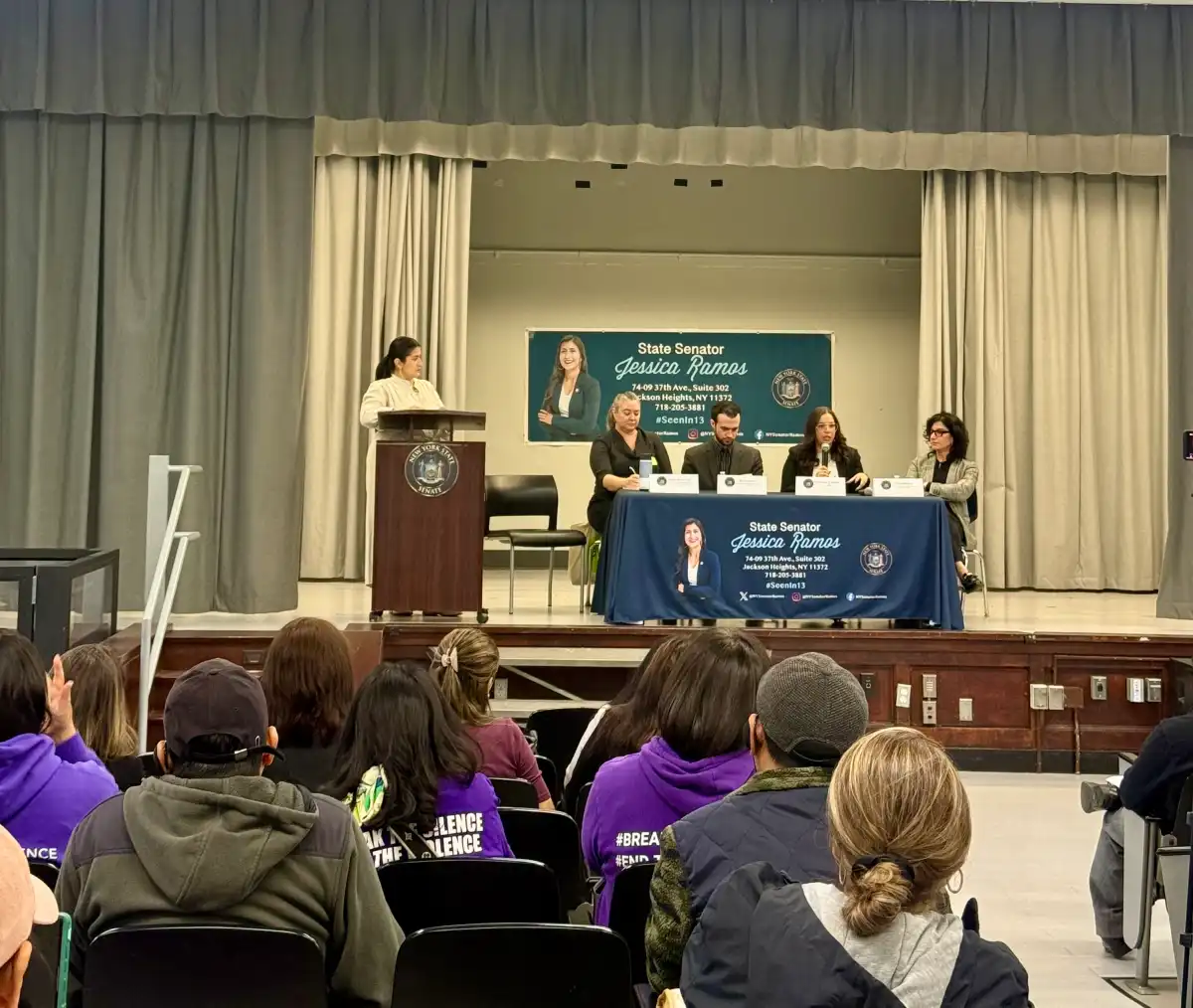
Immigrant workers and working-class families were the central focus of a community forum in Corona, Queens, hosted by State Senator Jessica Ramos, which brought together residents, advocates and officials this weekend to address human trafficking and labor exploitation in Queens, amid growing concerns about economic and social vulnerability in these sectors.
The “Behind the Hustle: The Reality of Work, Survival, and Exploitation” forum was held at PS 19Q The Marino Jeantet School and focused on human trafficking, labor exploitation, and the structural conditions that leave thousands of people at risk in Corona and other areas of Queens.
Throughout the meeting, workers’ rights organizations, health providers, legal defenders, educators and community groups described a panorama where exploitation is not always visible, but is constant: informal jobs without protection, overcrowded housing, economic instability and systems that take advantage of the lack of resources and the immigration status of many families.
The debate also put a spotlight on Roosevelt Avenue and nearby areas, where residents and advocates warn that the combination of poverty, housing insecurity and lack of access to basic services has created fertile ground for labor abuse and other forms of exploitation.
Representatives from the NYS Office of Temporary and Disability Assistance and the NYC Department of Consumer and Worker Protection participated alongside organizations such as Voces Latinas, the Libertas Center for Human Rights, Colectivo Intercultural TRANSgrediendo and specialists from John Jay College, among others.
At the center of the message was the need to change the traditional approach to responding to these crises.
“We cannot get out of these crises simply by arresting people when the problem is exploitation, poverty and vulnerability,” Ramos said. “Communities deserve safety, stability and real support. Protecting people means investing in prevention, workers, survivors, housing, health and long-term opportunities, while holding those who exploit and traffic others accountable.”
The panelists agreed that many victims of labor exploitation and human trafficking do not always identify as such immediately, as their conditions are often normalized within precarious work environments or in situations of economic dependency.
The forum concluded with a joint call to strengthen collaboration between government agencies, service providers, educational institutions and community organizations, with the goal of expanding protections for vulnerable workers and survivors.
“Queens deserves solutions based on compassion, prevention and long-term investment,” Ramos added. “Protecting vulnerable communities requires collaboration, opportunities, support and a real commitment to public safety that leaves no one behind.”