
More than 138,000 New York City public school students lived without permanent housing during the 2025-2026 school year, approximately one in eight students, according to a report published by Advocates for Children of New York (AFC).
According to data from the state Department of Education, more than 50,700 students (37%) spent part of the year in shelters, while about 81,100 (58%) temporarily shared housing due to loss of home or economic hardship.
Although the figure decreased by 10% compared to the previous school year, children’s advocacy organizations warn that the problem remains serious. The reduction was mainly due to a 22% drop in the number of students residing in hostels. All five boroughs saw declines, especially Manhattan.
The Bronx continued to have the highest proportion of students without permanent housing, while Staten Island had the lowest. In school districts 9 (Highbridge and Grand Concourse), 23 (Brownsville), and 32 (Bushwick), more than one in five students faced this situation.
In District 23, more than one in eight students lived in shelters, a proportion roughly three times higher than the city average.
“While it is encouraging to see student homelessness declining after reaching historic levels in 2024-2025, today’s data is nothing to celebrate,” said AFC Executive Director Maria Odom. “Last year was the 11th consecutive year in which more than 100,000 city students lacked permanent housing.”
Consequences in education
Housing instability also affects school performance. During the 2024-2025 school year, nearly half of students in temporary housing and 63% of those living in shelters were chronically absent from school. These absences represented at least 1.1 million days of lost instruction.
In 2025, only 27% of third through eighth grade students living in shelters met the proficient level in reading on state assessments, less than half the proportion among their permanently housed peers.
Additionally, just 59% of these students graduated high school on time, while 14% dropped out, a dropout rate roughly three times higher than that of students with stable housing.
“Every child in New York City deserves to have a permanent place to call home. Until that is possible, it is critical that students receive the support they need to be successful in school,” said Jennifer Pringle, director of the AFC Temporary Housing Student Project.
They ask for more support and school transportation
Advocacy organizations are calling for expanding rental assistance, housing voucher programs and the construction of affordable units.
Christine Quinn, former City Council president and executive director of Win, called it a “moral failure” that thousands of children remain without a stable home, despite the reduction recorded.
“In the richest city in the world, we cannot accept that this situation is considered normal,” said Quinn, who also highlighted the need to ensure reliable school transportation.
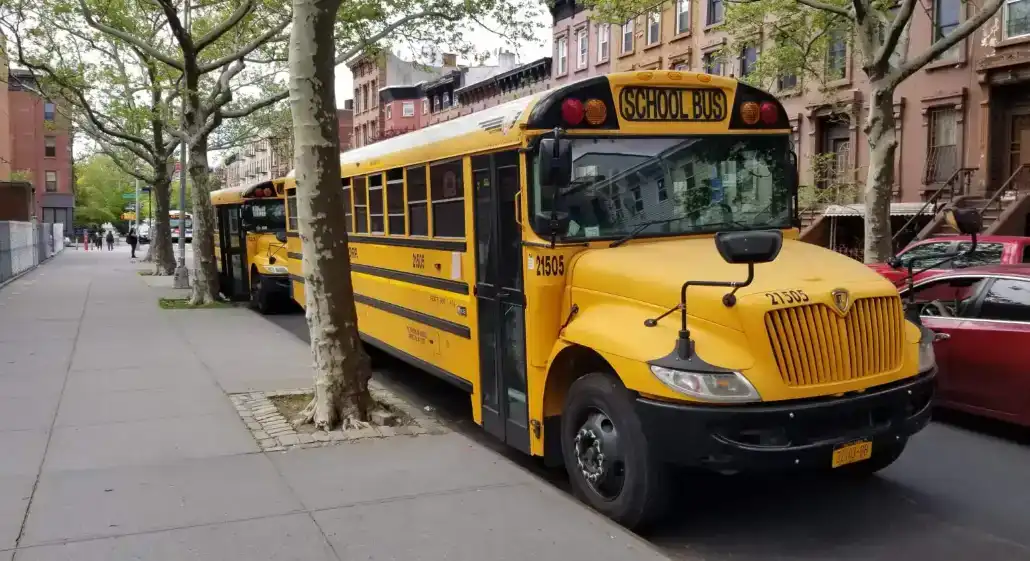
Nearly 1,800 students residing in shelters finished the 2025-2026 school year without bus service. In some cases, the municipal system did not have families’ transportation preferences recorded; in others, there were no buses available.
Quinn called for strengthening and streamlining rental assistance programs such as CityFHEPS, properly implementing the new CHAP voucher program, and ensuring the transportation and educational support students need.
Pringle called for a reform of school bus contracts, in force for decades, and the elimination of bureaucratic obstacles that hinder solutions for families housed far from their communities.
The Chancellor of Education, Kamar Samuels, assured that his department works with other agencies and organizations to guarantee the educational stability of these students. Among the measures he mentioned the creation of community schools in districts with a high concentration of shelters and changes in policies on housing meetings.
For her part, Erin Dalton, commissioner of the Department of Social Services, highlighted the reduction in students in temporary accommodation and chronic absences among those living in shelters. He stated that the agency will intensify support for families and efforts to facilitate their transition to stable housing.