
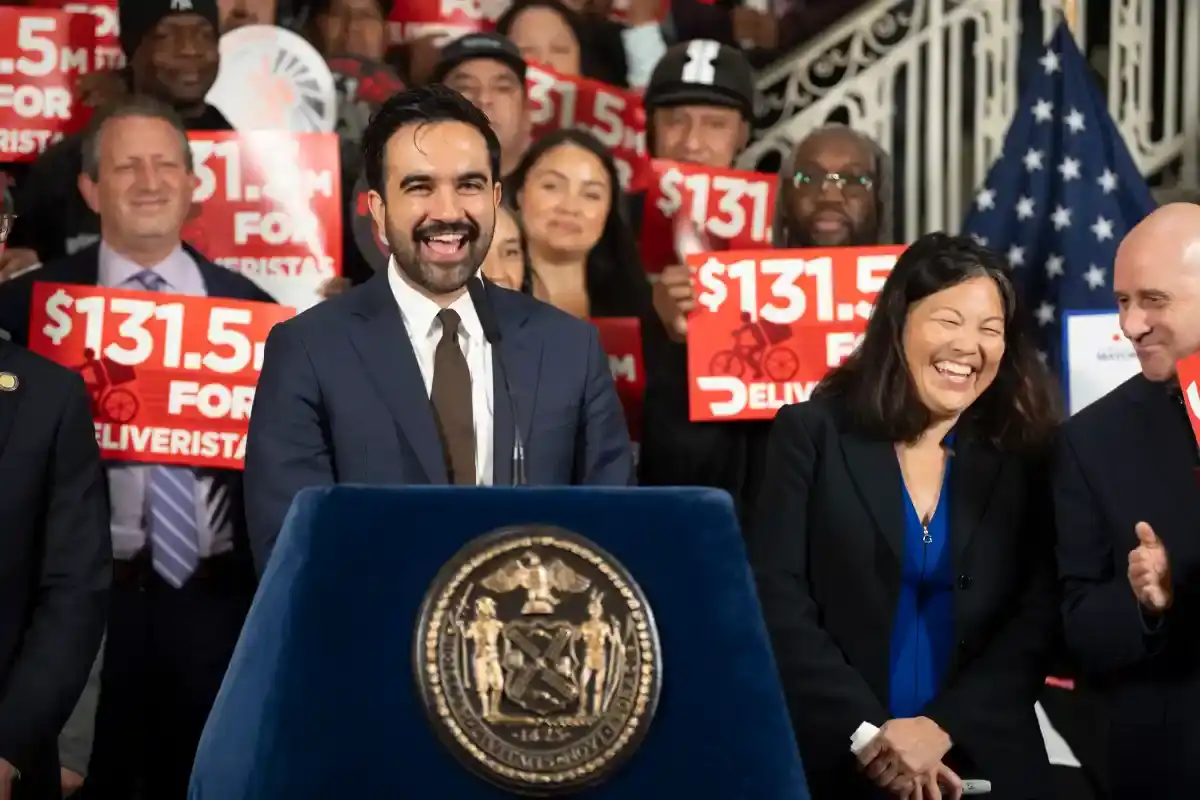
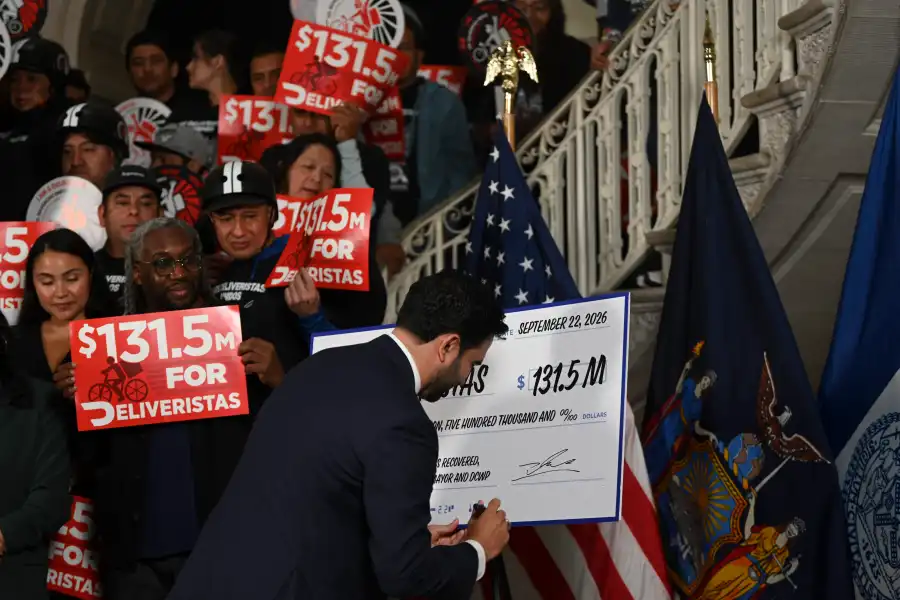
DoorDash will pay at least $131.5 million to resolve a New York City investigation that found the company failed to properly pay more than 260,000 workers. The agreement, considered the largest labor enforcement action in the city’s history, also forces DoorDash to change the way it registers and pays its delivery workers in the five boroughs.
Mayor Zohran Mamdani and the Department of Consumer and Worker Protection (DCWP) announced the settlement Tuesday, calling it the largest labor enforcement action in New York history and the largest municipal settlement in the United States involving food delivery workers.
More than $115.4 million will be allocated directly to workers. DoorDash will also pay about $11.3 million in civil penalties, $4.3 million for a worker-driven compliance program and approximately $468,000 to administer the settlement.
The total amount could increase. The settlement requires DoorDash to calculate additional payments that were not properly made for work performed between June 29 and November 29. Any additional payment to workers will be accompanied by another civil penalty equal to 13.79% of that amount.
The DCWP said the investigation began after dozens of workers reported that DoorDash had not paid them or paid them late. The agency later expanded the investigation by analyzing company records and found other violations of the city’s minimum wage rules.
DCWP Commissioner Sam Levine said Tuesday that the investigation began during the previous administration, but that increased prosecutorial resources under Mamdani allowed the case to accelerate.
More than 27,000 workers will receive more than $1,000
The investigation determined that DoorDash did not pay some workers and that others were paid after the established deadline. The agency also found that the company violated minimum wage rules by excluding from its calculations several categories of time that needed to be compensated, including some canceled trips, DashLink work and certain periods when workers were available to make deliveries in New York.
Workers who did not receive their payments or received them late will receive more than the amount they were originally owed. Mamdani said more than 27,000 workers will receive payments greater than $1,000, including more than 4,000 who will receive more than $5,000.
DoorDash acknowledged that some errors caused certain workers to receive insufficient or late payments. The company said Tuesday that “we made a mistake” and apologized to affected delivery drivers. However, he questions the city’s conclusions on a broader issue: how the time workers are available to take orders should be calculated.
The company said about 264,000 workers will receive payments, including about 209,000 who had missing or delayed payments. According to DoorDash, $6.6 million in payments never reached workers, while another $5.7 million arrived days or, in some cases, weeks late.
DoorDash said more than $83 million of the settlement is related to a dispute with the city over compensation for uptime, the periods when workers remain logged into the app between deliveries. The company maintains that its calculation method was “fair, practical and legal,” but agreed to use the method established by the city going forward, rather than spend years litigating the matter.
However, the DCWP formally determined that DoorDash failed to pay the required minimum fare by improperly excluding categories of travel time and availability that needed to be compensated. The consent order notes that those findings were made “without any judicial determination” and that DoorDash agreed to resolve the matter without a hearing.
Asked about DoorDash’s description of the underpayments as simple mistakes, Mamdani rejected that explanation, calling the violations “sustained” and “widespread,” and saying they affected roughly a quarter-million workers.
“I’ve never heard anyone describe a $131.5 million deal that way,” he said.
DoorDash attributes errors to technical glitches
DoorDash attributed the payment errors it acknowledged to technical glitches, complicated deliveries and, in some cases, incomplete or incorrect banking information provided by workers themselves. The company said it has already corrected the technical problems and strengthened its compliance program.
The deal announced Tuesday also requires DoorDash to modify parts of its app and payment systems in all five boroughs. Levine said compliance obligations began immediately, although standalone software to monitor workers is still in development.
Within 30 days, DoorDash must ensure that a delivery in New York cannot be offered to a worker unless the corresponding time is recorded as travel or standby time subject to compensation. You will also need to modify the way certain grouped deliveries are handled and put measures in place to prevent failed payments.
The company will also be required to provide workers with more detailed information about their earnings and minimum wage calculations, as well as provide DCWP with detailed compliance data for three years. Levine said DoorDash will also have to certify annually, under oath, that it meets the requirements.
The $4.3 million compliance fund established in the settlement will fund the Workers Justice Project and the Workers’ Algorithm Observatory at Princeton University to develop tools that allow workers to collect and share their DoorDash ride and payment data with the city. This will give regulators another tool to monitor company compliance.
Levine said the city plans to implement the software “as soon as possible.”
Affected workers will not have to submit any applications to receive the money, according to authorities. The DCWP said it has already identified eligible people through DoorDash registrations and that personalized notifications will begin going out in late October.