
Amnesty International denounced that the United States Government committed human rights (HR) violations in federal immigration operations in Washington DC, Chicago, New Orleans and Minneapolis between 2025 and 2026.
The NGO concluded this after investigating the actions of the Immigration and Customs Enforcement Service (ICE), the Customs and Border Protection Office (CBP) and other federal agencies in these operations, conducting 154 interviews and analyzing more than 30 audiovisual evidence.
The results of the investigation are contained in a 130-page report, published under the title “We Had Whistles, They Had Guns: Human Rights Violations in United States Immigration Control Operations and Reasons to Disband ICE.”
DD violations. HH. verified by the NGO include racial discrimination, discriminatory and arbitrary detentions and arrests, harassment, intimidation and illegitimate use of force, especially lethal force, which in some cases could constitute extrajudicial execution, indicates a summary.
Also “repression of peaceful protests, illegitimate use of reduced lethality force, illicit surveillance, cruel, inhuman and degrading detention conditions that could violate the prohibition of torture, illicit incommunicado detention and possible acts of forced disappearance.”
Possible “extrajudicial executions”
According to AI, the Donald Trump Government’s system of mass detention and deportation is driven by “false, xenophobic and racist discourses” and “theories of white supremacy”, and targets “the largest possible number of racialized migrants, asylum seekers and refugees.”
In this sense, it details that the operations in the four cities were based on discriminatory actions on racial grounds, which led to arbitrary arrests, and were accompanied by harassment, intimidation, degrading treatment and unjustified use of force by federal agents.
Specifically, AI lists as examples of illegitimate use of lethal force the shootings of Marimar Martínez and Silverio Villegas González in Chicago; Julio César Sosa-Celis, Renee Good and Alex Pretti in Minneapolis, and Philip Brown and Justin Bryant Nelson in Washington DC.
“The unlawful killings of Villegas González, Good and Pretti could constitute extrajudicial executions,” the document states.
Likewise, it denounces the repression of protests and the use of reduced lethality weapons such as tear gas and pepper spray against members of rapid response networks, observers or protesters, as well as the use of facial recognition technologies that violate the right to privacy.
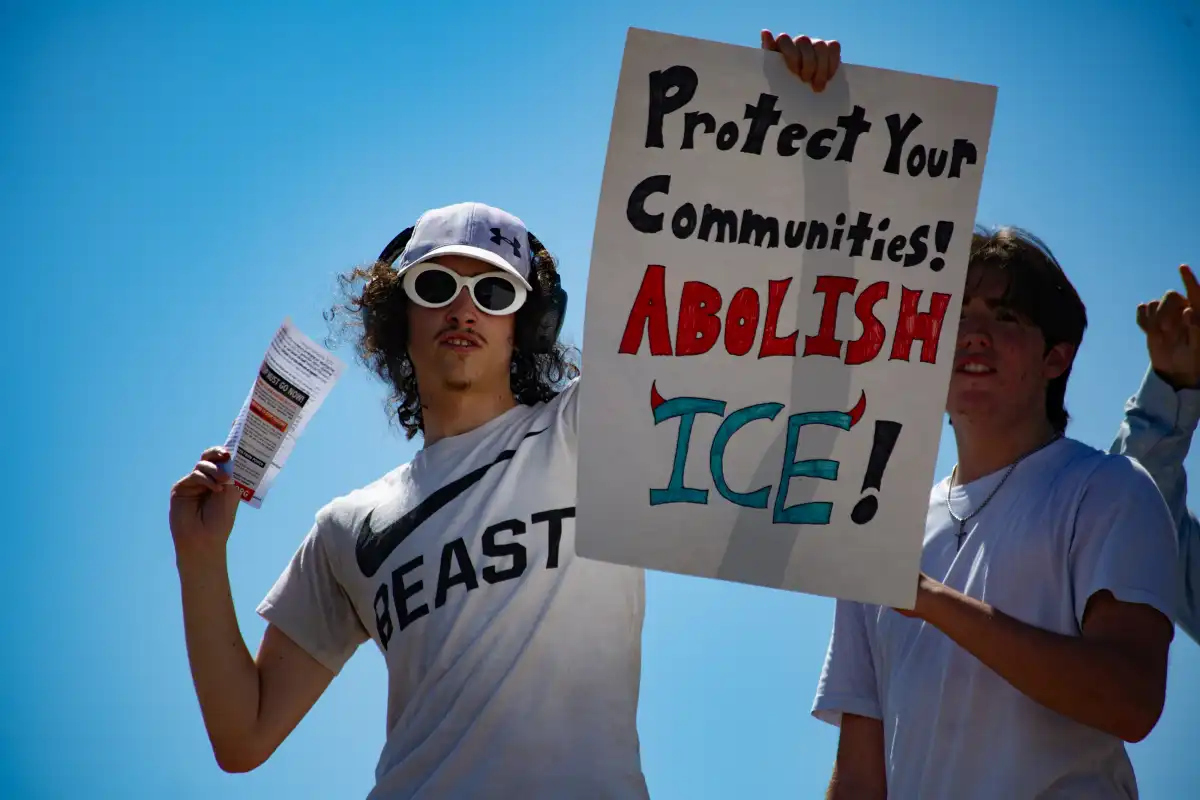
Demand the “dismantling” of ICE
Regarding detentions, AI observes a “widespread pattern” of misuse of field offices, processing centers and official agency buildings for prolonged detention, in some cases in “inhumane conditions” and with “coercion”, which it claims can constitute “torture.”
It also documents that detainees were denied access to legal assistance and their families, that attorneys were prevented from contacting them, and that ICE sometimes refused to confirm whether they had anyone in custody or reveal their whereabouts, which constitutes “incommunicado detention and possible acts of enforced disappearance.”
DD violations. HH. They are not attributed to the individual conduct of agents, insufficient training or lack of supervision, he adds, but rather to an institutional environment “openly supported and expanded by the Trump administration,” including a lack of accountability.
For the NGO, the “magnitude, persistence and structural nature of these institutional deficiencies cannot be adequately addressed through specific readjustments”, which is why it concludes that the “fundamental dismantling” of ICE is “necessary” to adapt the system to international obligations.
Finally, it highlights that the operations “created a general climate of fear that spread throughout migrant communities” and beyond, with many people withdrawn from public life, which altered normality in schools, health centers, temples, workplaces and neighborhoods.