
The legal sports betting market in the United States went from moving $57 billion in 2021 to almost $167 billion in 2025, an expansion that is transforming the sports business in North America and has among its protagonists young men, increasingly exposed to financial and mental health problems.
According to the American Gaming Association (AGA), companies grossed $16.89 billion in 2025, up 22.6% from the previous year, and generated $3.71 billion in state taxes. The 167 billion represent the money bet, not the players’ losses.
Business has also skyrocketed in Canada, where single-event sports betting has been legal since August 2021.
The province of Ontario opened the market to private operators in April 2022 and, since then, the volume of sports betting and other online predictions has increased by 64%: from 6,969 million Canadian dollars (about 4,912 million US dollars or 4,400 euros) in the 2022-2023 financial year to 11,414 million Canadian dollars in 2024-2025, according to the regulatory body. iGaming Ontario.
The clientele has a marked generational and male profile. A survey by the Siena Institute and the University of San Buenaventura indicates that 52% of American men aged 18 to 49 maintain an active account on online sports betting platforms, compared to 27% of all adults.
The same survey shows that 89% of bettors find it more interesting to follow matches when betting and 85% believe they can win money.
Researcher Justin Balthrop, from the University of Nebraska, warns that knowing a sport well can make fans believe they have an advantage over betting houses, although this is not necessarily the case.
Added to this are group pressure and publicity. A study from the University of Washington found an association between perceptions that friends approve of gambling and greater participation in gambling among young people.
In Canada, the Metropolitan University of Toronto found that 77% of male bettors under the age of 30 see betting advertising at least once a week and that 60% recognize that it influences their behavior when betting.
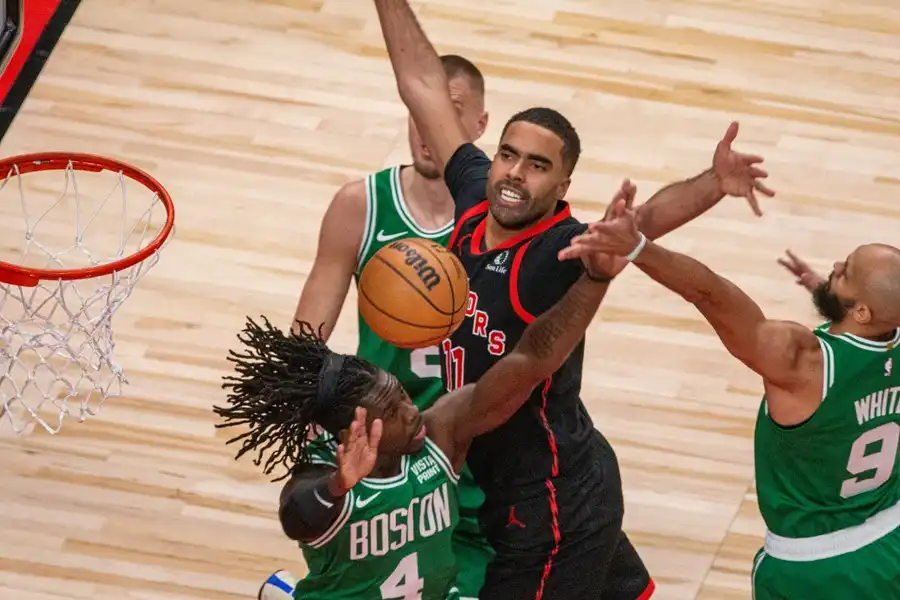
The consequences also have their own name. Former Toronto Raptors player Jontay Porter, who bet more than $30 million in his first two weeks on the FanDuel platform, told The New Yorker magazine that he made 143 bets worth more than $1 million during a single weekend.
Porter, banned for life from the NBA in 2024 for violating its betting rules, also lost $500,000 that he had obtained through a loan with his home as collateral. The report describes how FanDuel enrolled him in a VIP program that offered bonuses and other incentives to continue betting.
Among American bettors, 60% admit to having increased the amount of a bet to try to recoup losses, according to Siena. A study by the Urban Institute indicates that 15% of gamblers under 30 save less due to their bets.
The New York Federal Reserve has linked legalization to increased delinquencies on credit cards and auto loans among those under 40.
In Ontario, other research found that emergency room visits for gambling disorders were nearly double what would have occurred without the expansion of the digital market, with increases concentrated among young men.
The US National Council on Problem Gambling further notes that 70% of those who contacted its helpline in 2025 were men and almost half were between 18 and 34 years old.
And, although the majority of bettors do it occasionally, researchers warn that the financial damages especially affect those who bet frequently and have fewer resources.
(With a report from Julio César Rivas, from EFE)