
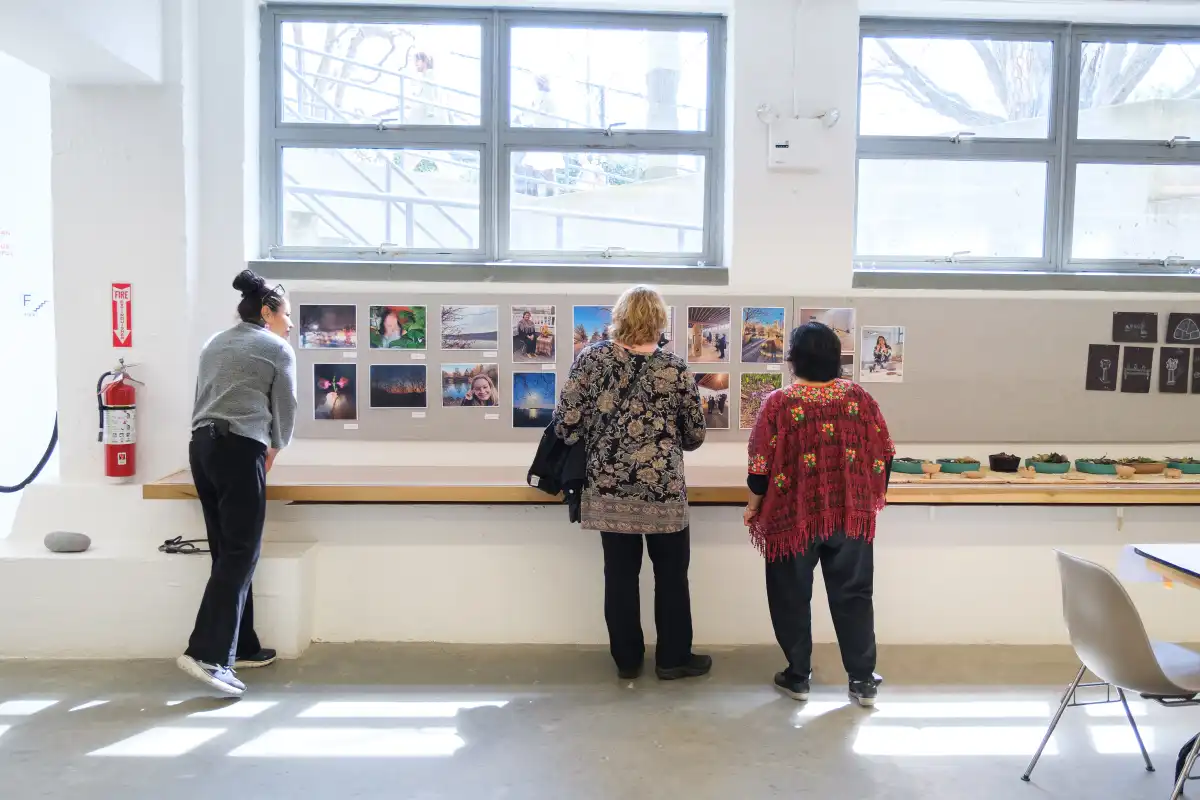
The Noguchi Museum, located on 33rd Road, Long Island City, has partnered with Project Luz—an initiative founded by artist Sol Aramendi—to offer free photography classes aimed at Spanish speakers during the winter season.
The classes, taught by Aramendi for eight weeks, began on January 18 and run every Sunday until March 8. The program seeks to welcome Latino immigrants from the local community and throughout the city, bringing them closer to the museum through art.
Aramendi, an Argentine immigrant who arrived in Queens 22 years ago, explained that her mission is to create safe and accessible spaces for the Latino community within cultural institutions. “We want the community to feel part of these spaces,” he said.
From a young age, Aramendi developed a strong connection with art thanks to his visits to museums. More than 30 years ago he began working with photography and film, and after immigrating to New York he took his educational experience to the Queens Museum. Since then, she has offered tours in Spanish and worked as an educator at institutions such as the Guggenheim, El Museo del Barrio, and public libraries in Queens and New York.
This trajectory has allowed him to create spaces where immigrants can express themselves and share their experiences as New Yorkers. For Aramendi, her classes function as an empowerment tool.
Queena Ko, director of education at the Noguchi Museum, noted that Project Luz’s mission connects deeply with the story of Isamu Noguchi, artist and founder of the museum. Noguchi, of Japanese-American descent, experienced racism and exclusion, experiences that decisively influenced his work.
Ko recalled that, during World War II, Noguchi co-founded an art collective in defense of Japanese-Americans and voluntarily interned himself in a relocation camp in Arizona. “His sense of not belonging and his belief that art connects, rather than divides, is a universal message,” Ko explained.
The museum, he added, was born with the intention of serving the community, a goal that Project Luz takes up by eliminating barriers such as the cost of entry and offering free programming. “Not everyone feels welcome in museums, and these initiatives help change that,” he said.
The program includes field trips, such as a visit to the Red Cube sculpture in Manhattan, and photo sessions inside the museum for participants to make personal connections with Noguchi’s work. No professional equipment required: many participants take photos with their phones, which are then printed and displayed at the end of the course.
Ko stressed that it is not necessary to have prior knowledge of art to enjoy the museum. “The meaning of art is built from personal experience,” he said. “The work grows with you and transcends cultures and languages.”
Aramendi reiterated that the Latino community is always welcome in his classes. “Here they find power through self-expression,” he said. “We want to continue growing and expanding access to the museum.”
Plan your visit
Admission to the Noguchi Museum is free on the first Friday of each month. To learn more about free programs, special events, and tours in Spanish or Japanese, visit Noguchi.org or write to [email protected].
Additionally, the “Noguchi’s New York” exhibition will open on February 4 as part of the museum’s 40th anniversary and will be open to the public until September 13.