

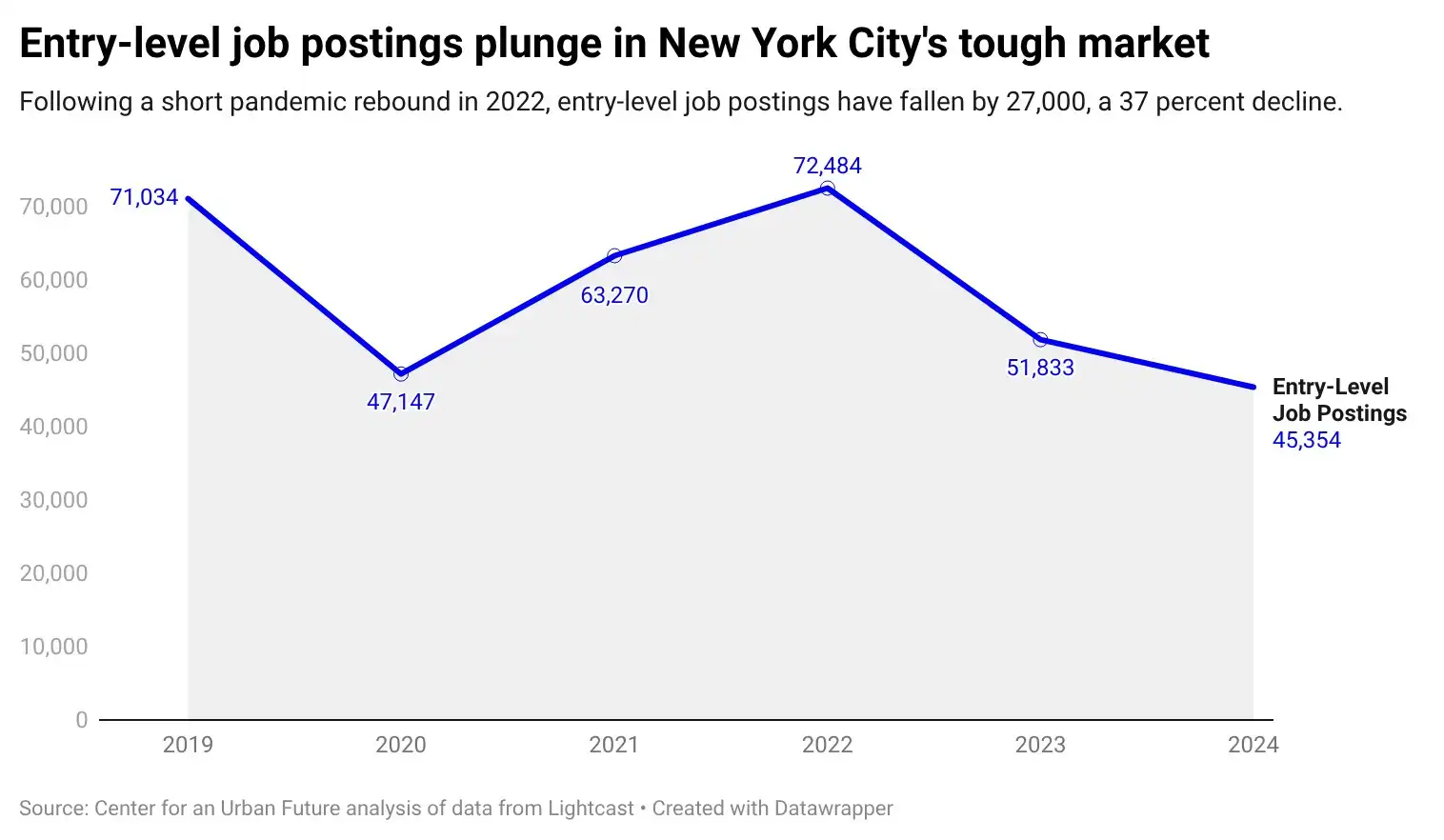
A new report from Center for an Urban Future (CUF), From Degree to Career: Why Strengthening Employer Partnerships at CUNY Is Key to Boosting Career Success for New Yorkersreveals that New York faces a particularly difficult job market for recent graduates. According to the study, entry-level jobs in the city have fallen more than 37% since 2022, directly affecting CUNY students, many of them Latino, who are looking to start their professional careers.
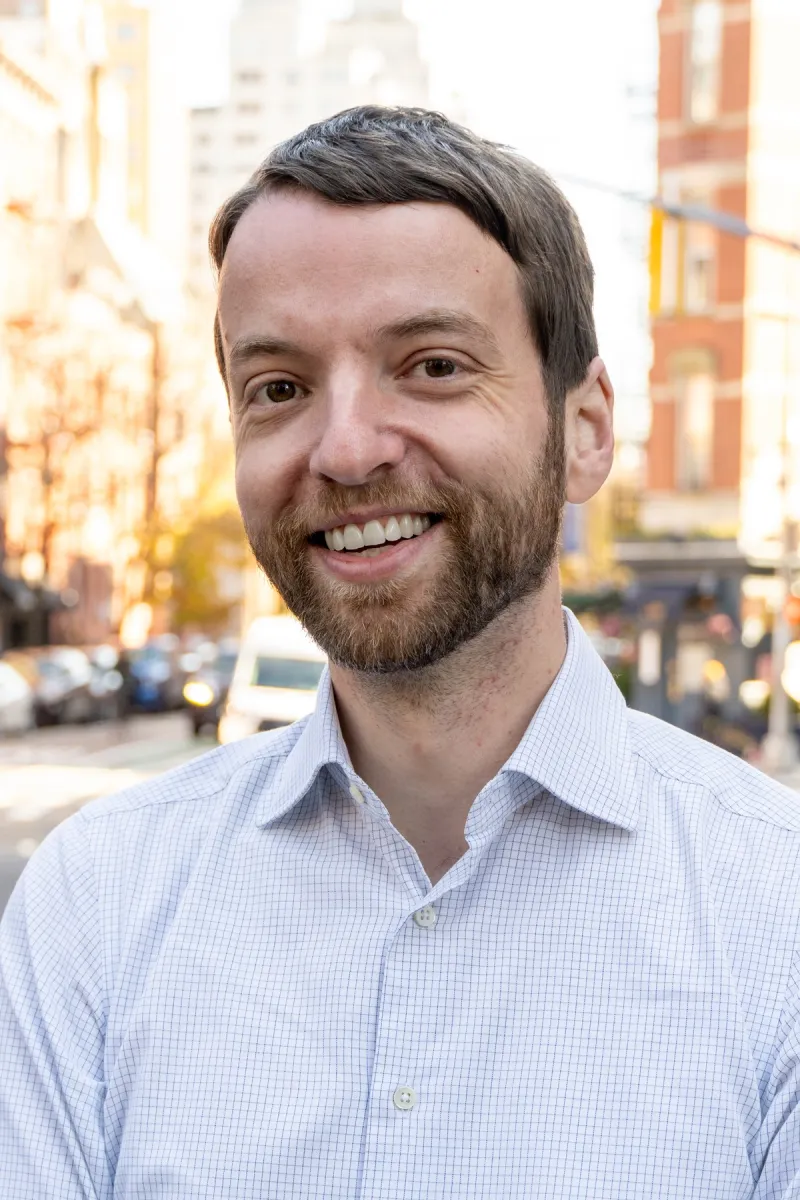
Eli Dvorkin, Director of Editorial Policy at CUF, explains the complexity of the job landscape: “When young people tell you that this job market is brutal, believe them. The data shows that New Yorkers graduating today are entering one of the worst economies for entry-level talent in years, if not decades. As more New Yorkers pursue college degrees as an entry into the middle class, if there are no jobs available at the end, that raises the burden on policymakers and the urban university even more. city to ensure that those degrees translate into careers and economic mobility.”
Dvorkin highlights that the situation is the result of multiple factors. Some sectors have not yet fully recovered from the pandemic, while others overhired during the recovery and are now cutting staff. Additionally, higher interest rates, global economic uncertainty, and advances in artificial intelligence influence hiring decisions, reducing entry-level opportunities. “We are seeing employers deciding to hire less because artificial intelligence can take over certain tasks that were previously performed by young talent,” says Dvorkin.
Additional Challenges for Latino Students
The impact is particularly strong on CUNY Latino students, who represent a significant portion of the university population. Many of these students work part-time or even full-time while studying to cover their expenses, limiting the time they can dedicate to internships, professional networking, and career exploration. This situation is reflected in graduation rates and employment outcomes: at CUNY community colleges, only 19% of students complete their degree in three years, compared to 26% of white students. For Hispanic men, the figure drops to 16.6%. In colleges, only 51% of Latino students earn a degree in four years.
The wage gap is also significant. Although the median income for all CUNY graduates one year after graduation is $57,000, Hispanic graduates earn a median of $51,000. This demonstrates that while CUNY degrees remain a path to economic mobility, Latino students face additional barriers that impact their earning opportunities and career development.
According to Dvorkin, one of the central challenges is that Latino students have less time and resources to engage in experiences that facilitate the transition to the labor market. Many combine studies with work, caring for family members, and domestic responsibilities, which limits their participation in extracurricular activities or unpaid internships. Therefore, it emphasizes the need to integrate professional preparation within the academic curriculum, not only as optional activities.
To address these challenges, CUNY has launched initiatives such as CUNY Beyond, focused on increasing paid internships and strengthening connections with employers. Dvorkin highlights that the programs that already exist show positive results: “Students who participate in these initiatives see double or triple the results in job placement and internships than their peers who do not yet access these programs. The problem is that these initiatives still do not reach the scale of all of CUNY, which has almost a quarter of a million students distributed across 25 colleges.”
The expert recommends students take the initiative early: consult with their academic advisors and departments about support programs, explore internship opportunities and develop professional networks. “Don’t wait until your senior year to think about your career. Start mapping out a plan early on: what courses to take, what internships to pursue, and how to connect with employers from your first year,” suggests Dvorkin. Additionally, he advises building social capital through practical experience and projects that demonstrate skills beyond academic qualifications, given that in today’s job market practical experience often outweighs degrees or grades.
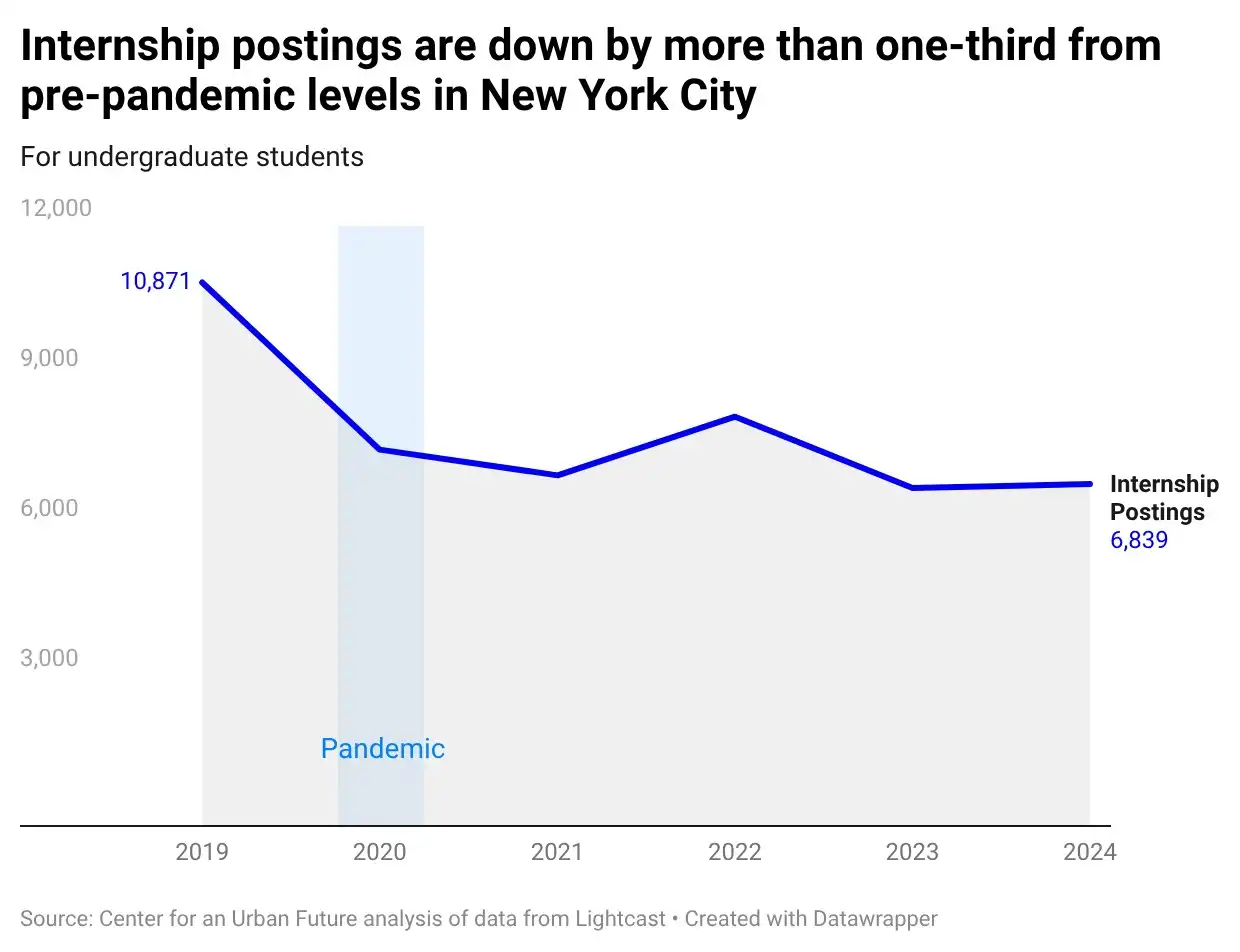
Dvorkin also emphasizes the responsibility of city and state government leaders: to invest in career success programs, expand paid internships, and facilitate connections between employers and students through technological infrastructure such as employer relationship management (CRM) systems. According to him, the city could lead by example by offering job opportunities to CUNY graduates within the municipal government, encouraging the private sector to do the same.
“For many Latino and immigrant students, CUNY is the main route to the middle class. But if that route fails, the consequences for the city are enormous. The gaps are not only academic: they translate into lower salaries and fewer opportunities,” warns Dvorkin. Therefore, expanding successful programs throughout the university is key to ensuring that more Latino students can convert their education into stable, well-paying employment.
In conclusion, the employment outlook for CUNY graduates is difficult, and Latino students face additional obstacles due to their work and family responsibilities. However, there are strategies and programs that can help them improve their opportunities: early participation in internships, development of social capital, and active use of university resources. According to Eli Dvorkin, the combination of scaled institutional initiatives and student proactivity is critical to transforming a college degree into an effective path to economic mobility and career stability.