

Techy was not satisfied with a single version of herself: in CHULA she decided to open wide the door to her inner world and let out all the women who inhabit it. The romantic, the daring, the comic, the nostalgic and the rebel sit at the same table… and they all ask for meringue. The result is an album that embraces different experiences, emotions and facets that have marked his life and career, turned into a sonic celebration where no version is left out or needs permission.
In her fourth studio album, the Dominican artist builds a musical universe that revolves around merengue, but without limiting herself to a single way of interpreting it. CHULA covers a wide range of styles within the genre, from traditional merengue and typical merengue, to house merengue, pambiche, electronic mambo and fusions with Afro-Dominican rhythms. The project not only reflects his artistic evolution, but also a deep process of reconnection with his cultural and creative identity.
With three years of work behind him, Techy delivers a production where each song opens a window to a different stage of his life. The album brings together collaborations with figures such as Fefita La Grande, Ella Bric, Claudia Brant and Yoel Henríquez, reaffirming her position as one of the strongest independent female voices in contemporary tropical music. With songs like “Nada” and “Peligrosa”, he exposes the duality that defines this new stage: the romantic and the explosive, the intimate and the danceable, the vulnerable and the empowered. Read the full interview to find out how CHULA became her most authentic statement yet.
You say CHULA is the most authentic representation of who you are. What version of Techy will audiences meet on this album that they haven’t seen before?
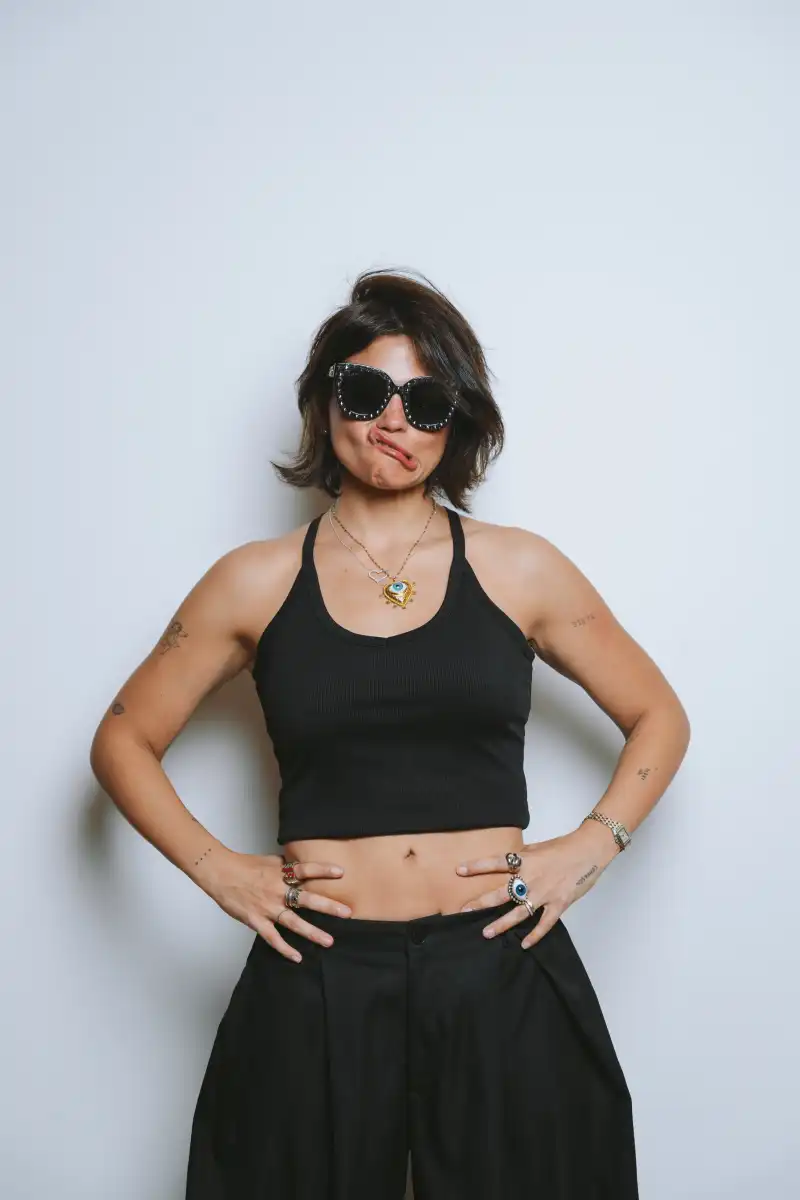
A much looser, honest and varied version of myself, both musically and in message. For years I felt that I had to fit into a more serious role as an artist, but at this stage I allowed myself to also integrate my more comical, lighter and human side. That’s why the album shows different facets of me, even on the cover, where my romantic side and my funniest and most spontaneous alter ego coexist.
The album explores “all the women that live in you.” What are some of those Techy covers that appear on these songs?
There are romantic versions like in Que me quedes tú or Cariñito, where I talk about love and family, and other more daring and comical ones like Hombre Malo, where I use humor and Dominican slang to talk about the “red flags” in relationships. There is also my more experimental side, where I explore typical merengue with Fefita La Grande and other rhythms such as bachata, Dominican palo, mambo and house merengue, without limiting myself to any sound or version of myself.
You mention that this project was born from an internal revolution. What was the most difficult and the most liberating part of that process?
It was a very intense process after a difficult 2021 on a personal and family level, with illnesses and losses that led me to confront emotions and traumas that I had not named. The hardest thing was facing those parts of me, but the most liberating thing was reconnecting with joy. That transformation led me to express myself from a freer place, and to understand that I should not set creative or emotional limits for myself.
Although you have experimented with other genres, today you embrace merengue as your musical home. What made you return to it with such conviction?
Merengue has always been part of my life and my identity; It is the rhythm that generates joy for me and with which I grew up, along with bachata. It was not a calculated decision, but something natural: a song came out in merengue just as I imagined it and that opened a creative path that connected me deeply with the genre, both emotionally and culturally.

What do you think merengue needs to connect with new generations without losing its essence?
Merengue is experiencing a good stage and continues to evolve with new fusions and artists who explore it inside and outside the Dominican Republic. It is a genre that is not going to die, but rather adapts, as great references such as Juan Luis Guerra have done. Today it is heard in different versions within popular music, from typical merengue to house or pop, and that keeps it current without losing its essence.
“Nothing” and “Dangerous” represent two very different sides of your personality. Which of the two do you identify with more today?
I can’t choose just one, because both coexist in me: there are days when I feel powerful, confident and ready to conquer everything, and others when I am more vulnerable and need affection and support. I used to feel like I had to be one or the other, but now I understand that both are part of who I am as a woman, and that our emotions are changing and complex.
Regarding collaborations, what did figures such as Fefita La Grande, Ella Bric, Claudia Brant and Yoel Henríquez contribute to the project?
They contributed a lot, not only on a musical level but also on a human level. They are extremely talented artists and creators, but also generous people who accompanied me in the process and enriched the album with their energy, experience and vision. I feel honored to have worked with them and to have built an album that would not be the same without their participation.

After CHULA, what artistic dream do you feel you are closest to fulfilling?
I am living a very important moment of international connection with my music, and although there is a dream that I cannot yet announce, I feel that a very significant door is opening. I’m also learning to enjoy the process more, because as an independent artist sometimes you focus too much on what’s missing. CHULA was a three-year project that I want people to enjoy, dance and feel, and my focus now is to be more present at this moment in my career.