
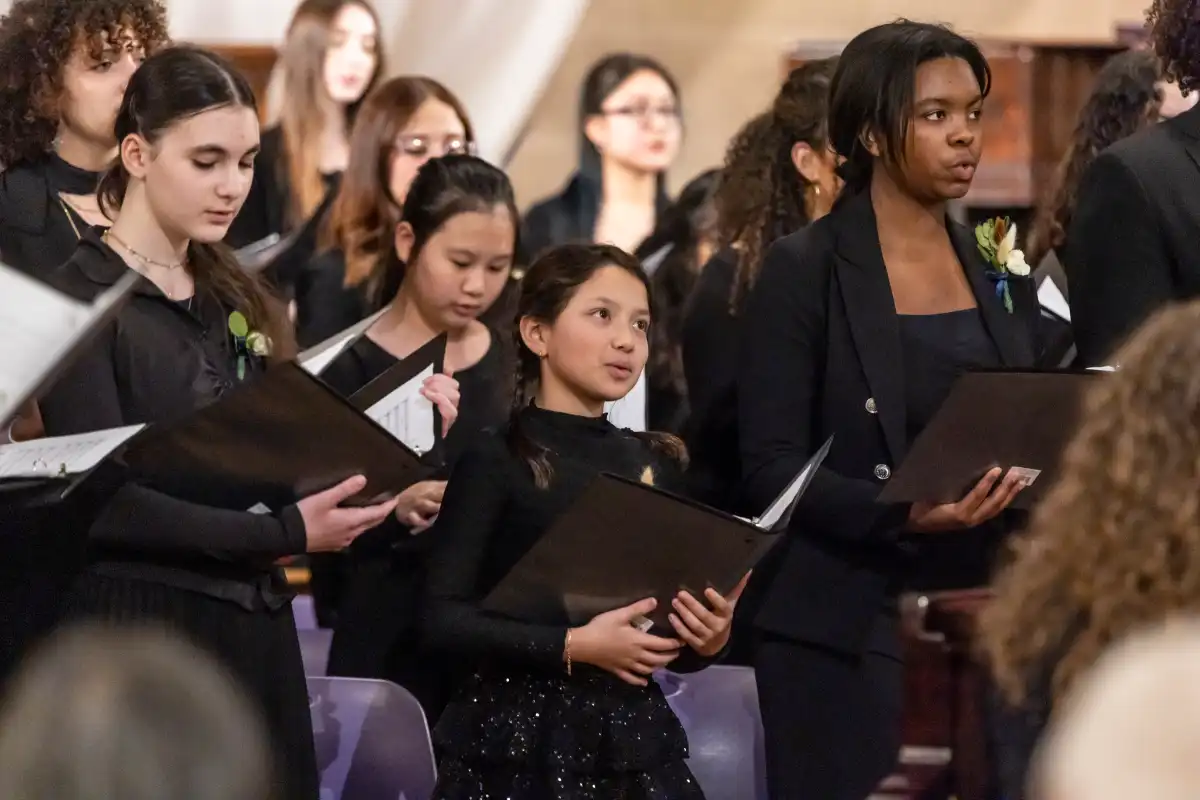
The Juilliard School, one of the most prestigious conservatories in the world, recently captivated audiences with a performance of Brave, performed by a choir of young musicians from the Juilliard School Music Advancement Program (MAP). This program, completely free and held on Saturdays, seeks to expand access and training opportunities in classical music for intermediate and advanced youth in the five boroughs of New York City and the tri-state area.
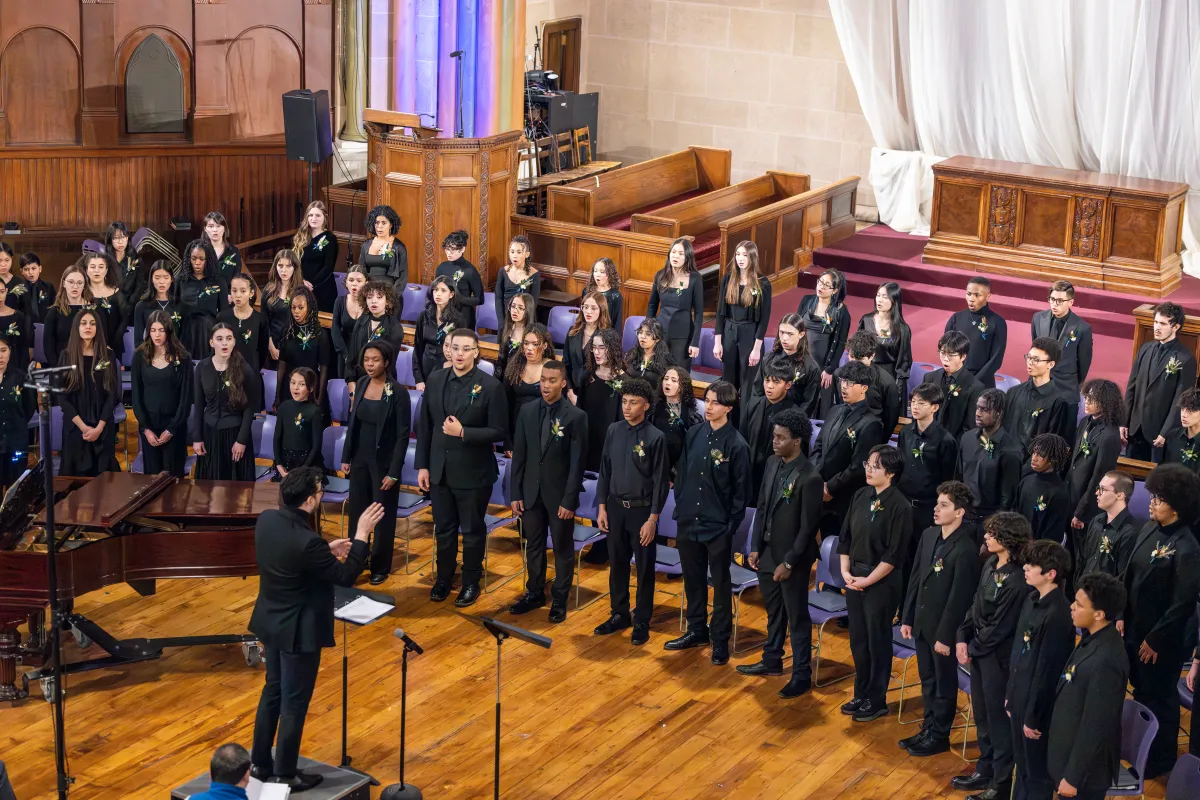
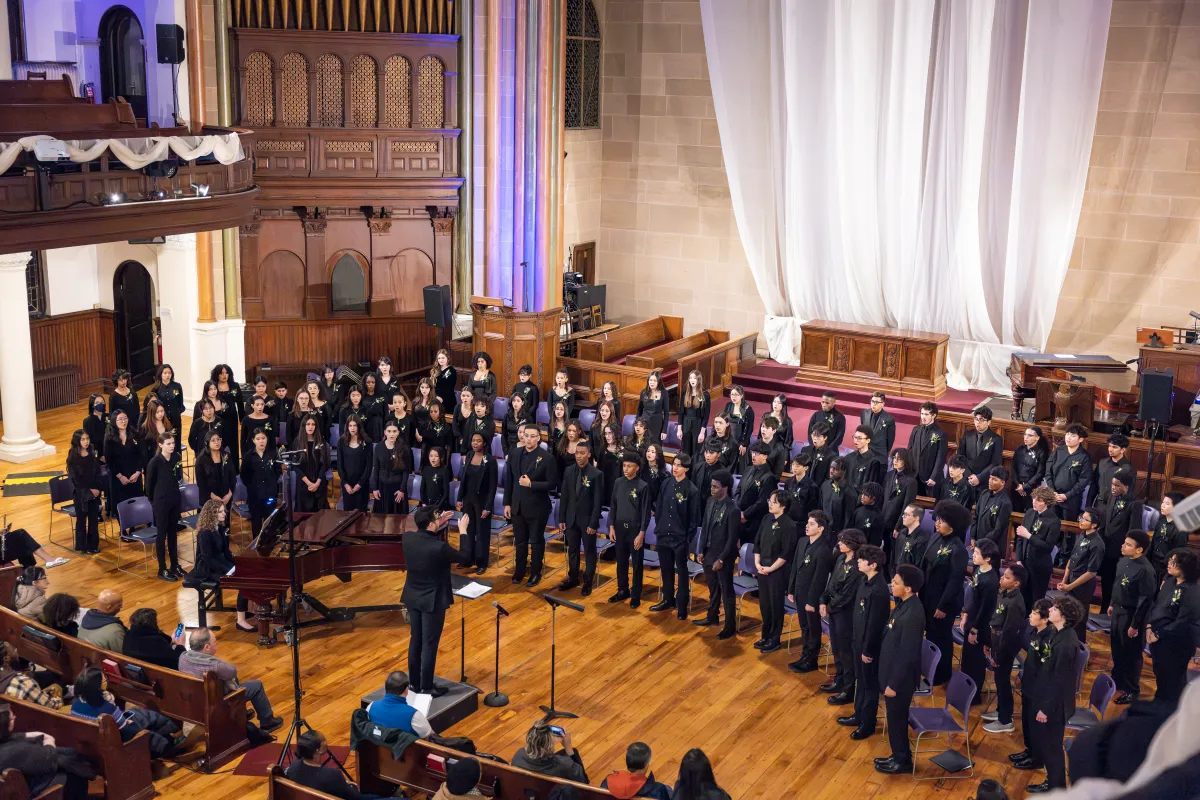
The choir of 105 young people offered a vibrant performance that captivated the audience, highlighting the high artistic level, discipline and collective strength that characterize the program.
The work Brave, composed by the Mexican resident in New York Jaime Lozano, was created especially for this ensemble of the Juilliard Music Advancement Program. The piece explores the search for one’s voice, personal courage, and the power of community through collective singing, reflecting the core values of the program.
The composer added that the work was born from his coexistence with the students during rehearsals and conversations. “I was inspired to see their desire to express themselves. Brave talks about finding your voice, both musical and personal, and the importance of community,” he said.

“It is a wonderful, free project that happens every Saturday. Students take instrument classes, participate in ensembles and are part of a choir of more than 100 young people where they learn to make music together,” Lozano explained.
For Lozano, the access that MAP offers is key. “I came to New York thanks to a scholarship. MAP breaks economic and cultural barriers and allows diverse young people to access top-level education,” he said.
Lozano hopes the piece will have a lasting impact. “If Brave can give them confidence and inspiration, then it has served its purpose,” he said.

Comprehensive training and community building
The training work of the program is led by the choir director, Adrián Rodríguez, who in addition to directing the ensemble focuses on the comprehensive development of the students on and off stage. Rodríguez explained that MAP not only trains musicians, but also accompanies young people in their academic and professional growth.
“MAP offers comprehensive support: guidance for summer programs, advice on the university process and connection with higher-level teachers. We also involve families with workshops and resources so that they can better support their children. We seek to ensure that students have the tools, confidence and connections necessary to advance,” he said.
Likewise, he highlighted the value of choral singing as a training tool. “Singing is essential because it develops musicality and community building. Here students learn to collaborate, listen and express themselves together,” he added.
Voices that grow within the program
At the heart of MAP there is not only music, but stories of young people who find a space to belong, grow and be heard.
For many students, the program represents an opportunity that goes far beyond musical training: it is real access to a world that once seemed far away and a community where their voice matters.
Student Luciana Vélez highlighted the direct impact on her artistic development. “MAP has helped me grow a lot as a musician and become more versatile. Being a free program, it makes music more accessible to me and other young people in the tri-state area,” he said. Regarding his experience in Brave, he added: “Meeting Jaime Lozano helped me understand the piece better and connect more with the music.”
For Rossy Ramírez, the program also breaks deep barriers. “MAP opens doors where income does not determine how far you can go,” he said. When talking about the work, he connected with its central message: “It talks about moving forward even in difficult times.”
For his part, Sebastián Chang described MAP as a turning point in his musical life. “It is a blessing for me and my family. It allows me to learn from high-level musicians and connect with young people from different cultures,” he explained.
Between rehearsals, classes and performances, MAP thus becomes more than just a training program: a space where students not only learn music, but also confidence, identity and community.
Access, application and upcoming MAP events
The MAP is open to students ages 8 to 17 with at least two years of musical experience (three on violin and cello), residents of New York, New Jersey or Connecticut.
Applications for the 2027–2028 cycle open December 1 through the Juilliard admissions website (https://www.juilliard.edu/admissions#arm). The program will also have an open house in March 2027. Interested families can register to receive more information by joining the mailing list at:
https://www.juilliard.edu/school/preparatory-division/music-advancement-program/connect-map.
Additionally, the MAP Wind Ensemble, String Ensemble and Orchestra will perform on Saturday, May 2 at 7:30 pm in Alice Tully Hall. Admission is free, but tickets are required.