
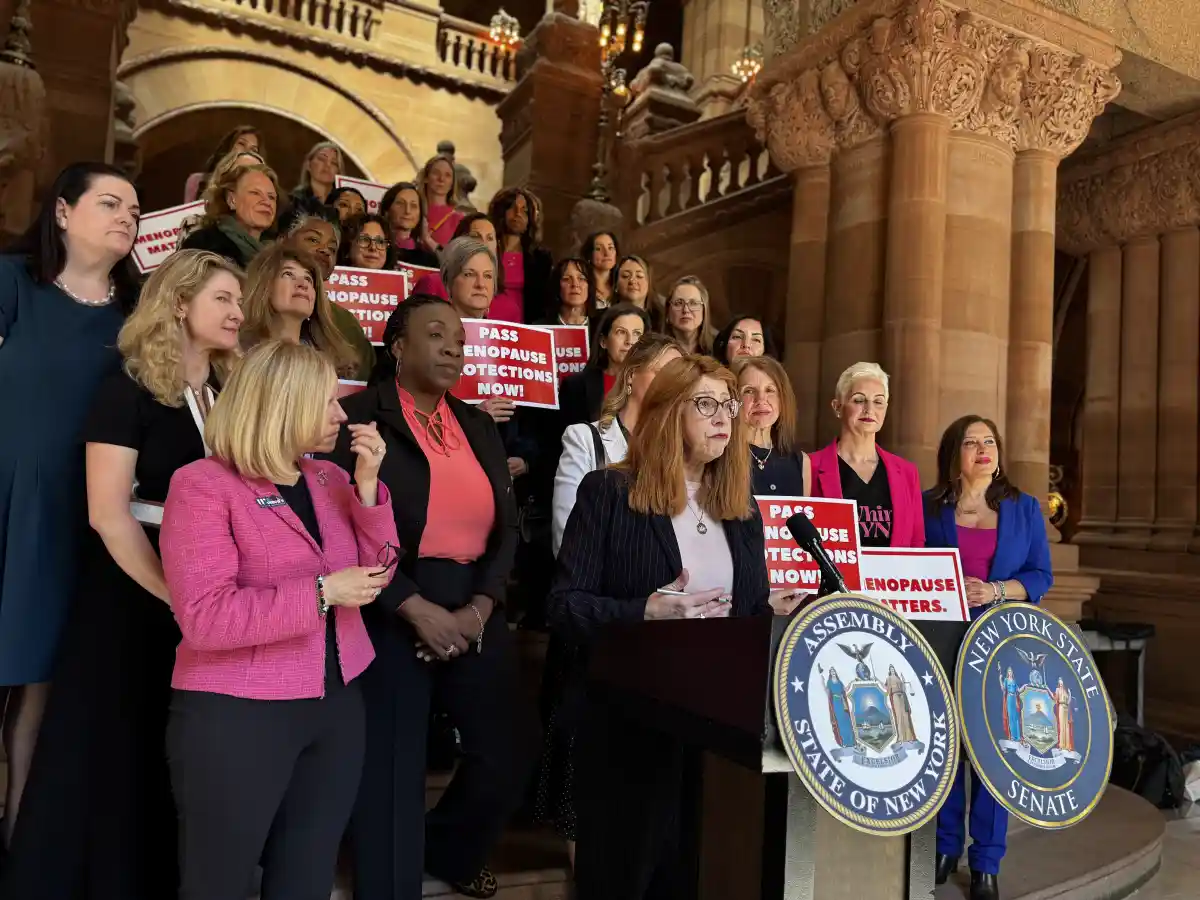
Assemblywoman Linda B. Rosenthal (D/WF-Manhattan) on Monday pushed state lawmakers to pass a series of bills aimed at providing greater support to women going through menopause.
Proposals include legislation to require insurers to cover the cost of menopause treatments, improve training and education of health professionals, expand the State Department of Health’s public information on menopause and perimenopause, and establish workplace protections against discrimination toward women experiencing these changes.
“We cannot allow the status quo to continue,” Rosenthal said. “At a time when state legislatures across the country, and even the federal government, are making life harder for women, New York must lead by advancing common-sense policies that prioritize women’s health care.”
Rosenthal said she is committed to pushing the bills through to final approval “for every woman who has ever been fired, misdiagnosed or simply ignored during menopause.”
Perimenopause and menopause occur when a woman’s body reduces and eventually stops producing reproductive hormones such as estrogen and progesterone. This occurs, on average, around age 52 in the United States, although it can begin as early as the late 30s or earlier due to other medical conditions.
Bills stalled in Albany
Some of the initiatives presented last year received mostly favorable responses in committee, according to official Assembly votes. Proposals to force insurers to cover treatments and protect against employment discrimination have gone through several rounds of amendments.
However, almost the entire legislative package stalled in early 2026, with little progress on all initiatives except the one requiring the Department of Health to improve its public information on menopause and perimenopause. A representative of Rosenthal’s team told our sister publication, amNewYork, that the state budget’s delay — 27 days late — has contributed to the stalemate.
Lisa McDonald, director of policy and advocacy at The ‘Pause Life, said it’s time for states to do more to support and educate women going through menopause, something they will all experience if they live long enough.
He explained that this natural stage is more complex and relevant to health than is commonly recognized. In simple terms, menopause is not limited to hot flashes.
McDonald learned this abruptly at age 46, when her ovaries were removed and she entered induced menopause, a more intense type in which hormones drop rapidly.
“I experienced very severe physical symptoms, as well as mental symptoms that I wasn’t expecting,” McDonald said. “My doctors were wonderful people, but they didn’t prepare me for what I was going to experience or what to expect.”
Although she received hormone therapy, she noted that proper treatment is key to long-term health. Women who do not receive adequate care face a higher risk of cardiovascular disease, osteoporosis and urinary problems.
Decreased estrogen during menopause has also been linked to an increased risk of dementia and Alzheimer’s, according to the Alzheimer’s Research Association.
McDonald highlighted that the lack of accurate information also affects women’s social and work lives.
“The importance of these labor protections is to normalize the conversation, to bring it to light,” he said.
He added that this change is key to improving the way society perceives menopause and to ensuring adequate support.
Nationally, legislative momentum on menopause is growing, with 25 states introducing more than 60 bills in recent years.
McDonald said this increased awareness sends a message of hope: menopause does not mean a woman’s best years are over.