
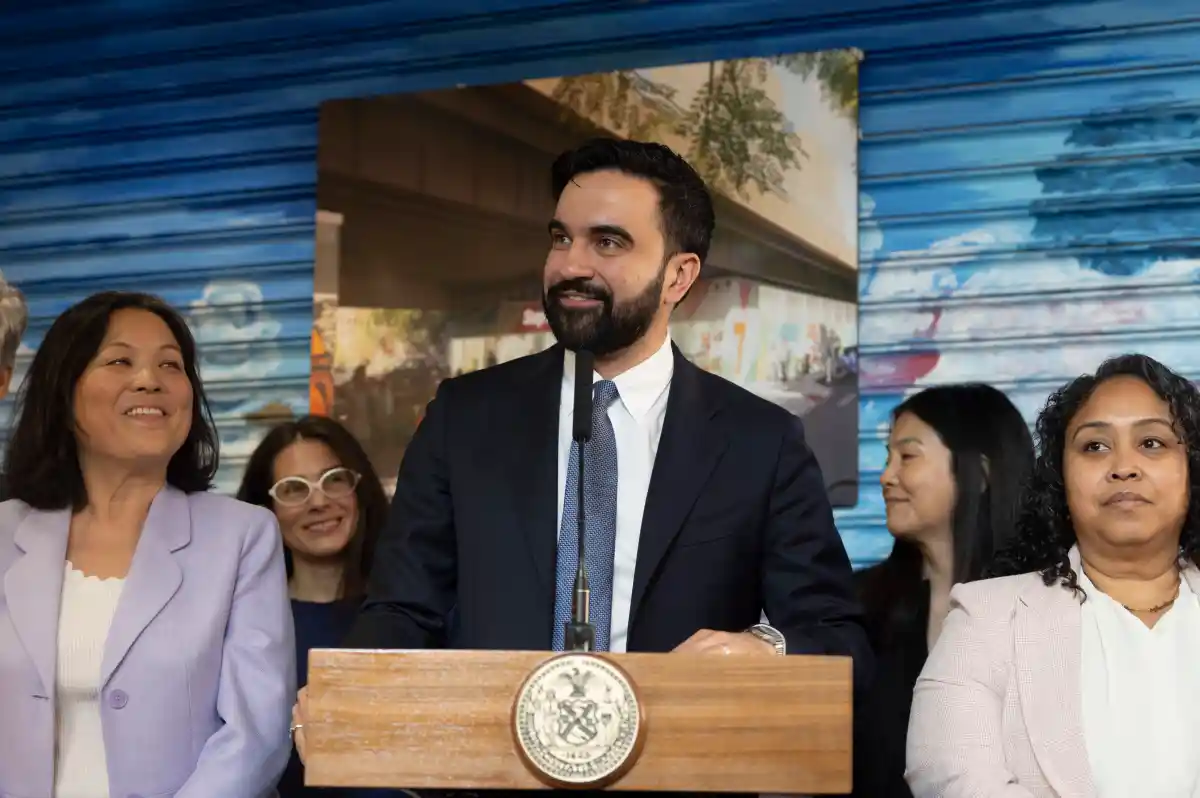
The municipal supermarket plan – one of his most notable campaign promises – is advancing as a central commitment of Mayor Zohran Mamdani. Mamdani said the city will open the five stores, one in each county, before the end of his first term, with the first opening planned for next year. He said supermarkets will offer fair prices and treat workers with dignity.
“In our stores, eggs will be cheaper, bread will be cheaper,” he said. “Going to the supermarket will no longer be an equation that is impossible to solve.”
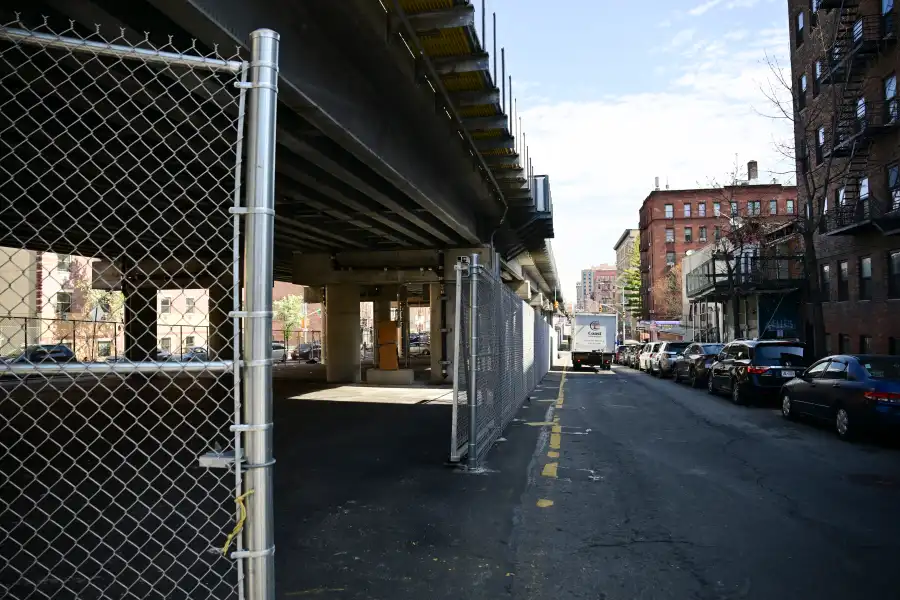
One of those stores, he explained, will be in La Marqueta, in East Harlem, in “a brand new store on municipal land” that is currently empty. He noted that in that neighborhood about 40% of households received public assistance or SNAP benefits over the past year.
During a press conference, Mamdani explained that the model will not be that of traditional municipal supermarkets operated directly by the city. Instead, the government will own the land, cover major infrastructure and operating costs, and hire a private operator to run the store and sell basic foodstuffs at discounted prices.
The core of the plan is the creation of a “basic basket” of essential products at lower prices. The city will establish the standards for that basket and require the private operator to meet them through contract. Mamdani insisted that the goal is to ensure real reductions in basic products such as bread, eggs and other essential foods.
Management estimates all five stores will be open by 2029. However, the first supermarket could open in 2027. The East Harlem project is the slowest because it requires building from the ground up on vacant city land, with prevailing wages and coordination among multiple agencies. Other locations could move faster if they use existing spaces.
The La Marqueta site was presented as the emblematic case of the program, although not necessarily the first to operate. The government defended the choice of the area because of its high economic need: 65,000 people live within 10 minutes of the proposed site, including thousands of public housing residents. Officials also pointed to high rates of SNAP and welfare use as evidence of the area’s affordability crisis.
Local authorities and community representatives reinforced this diagnosis. Some highlighted the lack of access to healthy foods and its relationship to health problems such as diabetes and heart disease. Others recalled the closure of historic supermarkets in the area and the reliance on small or temporary markets. La Marqueta, at its busiest time, received tens of thousands of customers daily.
The plan, however, raised questions about its impact on existing businesses. Supermarkets and small food stores already operate in East Harlem. The mayor argued that the program does not replace other policies, but rather complements the strategy against food insecurity, since previous initiatives based on subsidies failed to guarantee lower prices.
One of the most important unresolved points is how discounts will be calculated. The administration said the private operator will have to apply reduced prices to a basket of basic products, but did not explain the exact formula. A possible percentage discount on average prices was mentioned, although the final mechanism has not yet been defined.
Uncertainty about working conditions also persists. Officials spoke of “union-level standards,” but the mayor avoided committing to unionized jobs. He clarified that these standards will refer to salary levels and benefits that the city will include in the contracts, but that the union structure will depend on negotiations with private operators.
Financing of the program also faces political debate. The city is proposing an investment of approximately $70 million in capital, against a backdrop of a multimillion-dollar budget deficit. The City Council has not yet endorsed the proposal, and its approval is necessary to move forward.
Economists and analysts have urged caution. Some note that the public-private model could be more efficient than direct government operation, but caution that success will depend on careful planning, especially in operator selection and cost structure. Studies of other municipalities, such as Chicago, have concluded that cities can provide infrastructure and support, while leaving day-to-day operations to private players due to the tight margins of the food retail sector.
On the ground, some merchants expressed concern about competition with a city-backed supermarket. Local store owners and workers noted that they already face high rent, tax and operating costs, and that the entry of a subsidized player could affect their viability. They also asked that the city focus on reducing tax and regulatory burdens for small businesses rather than creating direct competition.
The City Council, for its part, has not presented a detailed study on the economic impact on nearby businesses. Mamdani stated that municipal supermarkets will be part of the city’s economic and civic ecosystem, and maintained that their approach will differ from traditional warehouses by focusing exclusively on fresh and basic foods.
The debate remains open as the administration moves forward with the design of the program, whose success will depend on defining elements still pending: how prices will be set, what exactly “basic basket” means, what role private operators will have and how labor standards will be integrated into the final model.
-Translation and editing by Karmina L. Fonseca