
Supporting children with autism. April is “Autism Acceptance Month,” and experts now estimate that one in 31 children in the United States has an autism spectrum disorder.
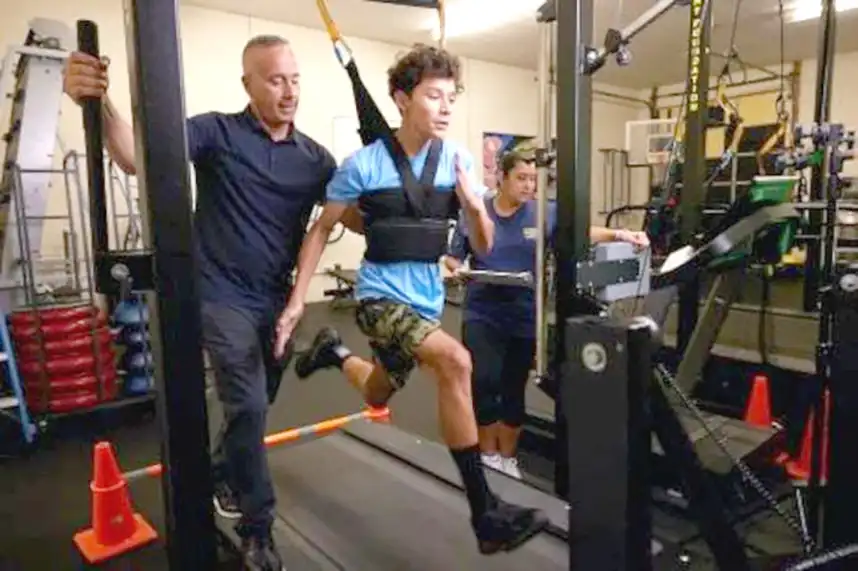
To help parents better understand how to support children on the spectrum, Alexander Lopez, JD, OT/L, associate professor of occupational therapy at the New York Institute of Technology, shares practical guidance and tips—including how exercise can improve motor function (muscle coordination) and cognitive performance.
Children with special needs often have few opportunities to exercise and develop the fundamental skills necessary to participate in conventional activities.
For example, learning to swing a baseball bat can improve coordination, balance, attention, and planning. These essential skills can then be transferred to most daily activities.
Lopez, a licensed occupational therapist, has developed specific sports programs designed to help a child’s brain process sensory information, promoting structural and functional changes in the brain.
“The brain and body are uniquely malleable, and occupational therapy interventions using sports and exercise can improve brain performance and help children develop strategies to minimize or manage the effects of unpleasant or confusing sensory information,” explains Lopez, who is also founder of the nonprofit gym Inclusive Sports and Fitness, Inc., which recently opened a location on the New York Tech campus in Old Westbury, New York.
In addition to improving their physical skills, children who participate in Lopez’s exercise-based program develop lasting friendships and self-confidence, benefits that are reflected in almost every aspect of their lives. Families report improved outcomes at home and at school, including emotional, behavioral, and academic gains.

Of course, the lessons and experiences kids gain outside of the gym are important too. Lopez encourages parents to present a united front, including offering consistent messages, enforcing rules and limits, and encouraging their children to reach their full individual potential.
“Despite facing certain developmental challenges, a child with autism is not defined solely by their condition,” explains Lopez.
“That child remains a whole person, with his or her own abilities, potential, and strengths. With supportive resources, loving parenting, and specific therapies, many children on the autism spectrum develop greater independence, confidence, and meaningful participation in everyday life. But the foundation of that success begins at home. When parents provide consistent structure and use positive reinforcement, they create an environment where their child can develop skills, feel successful, and thrive.”
Lopez also emphasizes the importance of setting expectations, maintaining daily routines from an early age, using structured schedules and visual checklists for activities like brushing teeth or getting dressed, which can help children become more self-sufficient over time.
By applying the same fundamental strategies—consistency, structure, and positive reinforcement—parents can foster autonomy, skill development, and a sense of accomplishment that grows with the child.
Lopez is one of many New York Tech professors who bring their expertise to help address real-world challenges. Visit nyit.edu for more information.